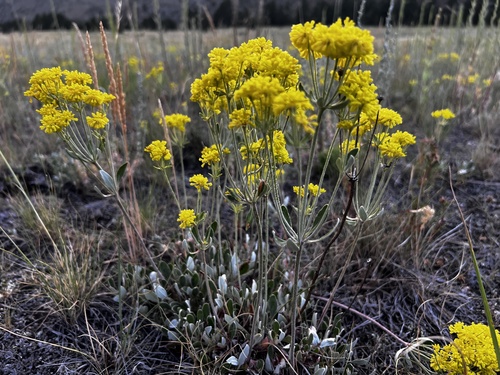
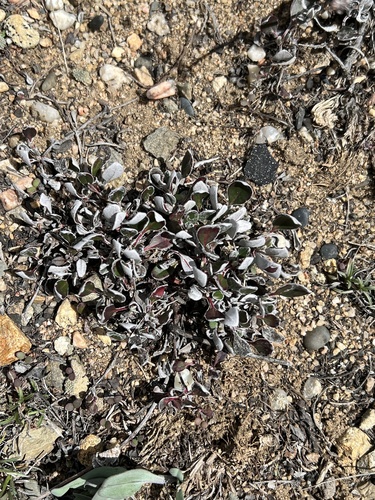
Sulfur Buckwheat
Eriogonum umbellatum var. bahiiforme
Care
full sun
very low
Fast, Medium; Prefers sandy or gravelly soil with fast drainage.
0–7ft tall , 5–5ft wide
Jun-Nov
Evergreen
Resistant
Prized
Sierra Nevada and White Mountains of central California from Mono County south to Inyo County, between 5000-10000 ft elevation in dry, open woodland and scrub.
Care Guide
Planting
Plant your sulfur buckwheat in full sun in a location with fast-draining, sandy, or gravelly soil - this is non-negotiable since it despises sitting in moisture. If your garden has heavy clay, amend the planting hole generously with coarse sand or gravel, or consider a raised bed or container where you can control drainage. Plant in spring or fall when temperatures are mild, and space according to the variety you bought (this one can stay compact at 4 inches tall or sprawl larger - check your plant tag).
After Planting
Water weekly for the first summer to establish a strong root system, then taper to no more than 3 times per month once established - after that, this is a truly drought-adapted plant that needs almost nothing. The #1 mistake is overwatering; if leaves start to look mushy or the plant wilts even when soil is moist, you've watered too much and root rot has likely set in. Beyond watering, this plant is nearly carefree: it tolerates cold down to 0°F, flowers prolifically from June through November, and resists deer.
Endangered & Threatened Species Supported
Listed under ESA; found only in San Bernardino County, California
Listed due to habitat loss and decline in alkali wetlands
Multiple subspecies with varying threats
California Endangered Species Act listing
Listed under California ESA
California Species of Special Concern; monarch populations declining
Wildlife Supported
Insects

Primary larval host plant; caterpillars feed on flower buds and developing inflorescences

Host plant for multiple generations; caterpillars develop on flowers

Specialist pollen forager on Eriogonum; nests in nearby alkali flats

Caterpillars feed on developing flower structures

Specialized host plant relationship; critical for larval development

Specialist on wild buckwheat species; caterpillars feed on developing buds

Host plant for larval development; specialized feeder on Eriogonum

Caterpillars feed on flower buds and stems
+7 more species