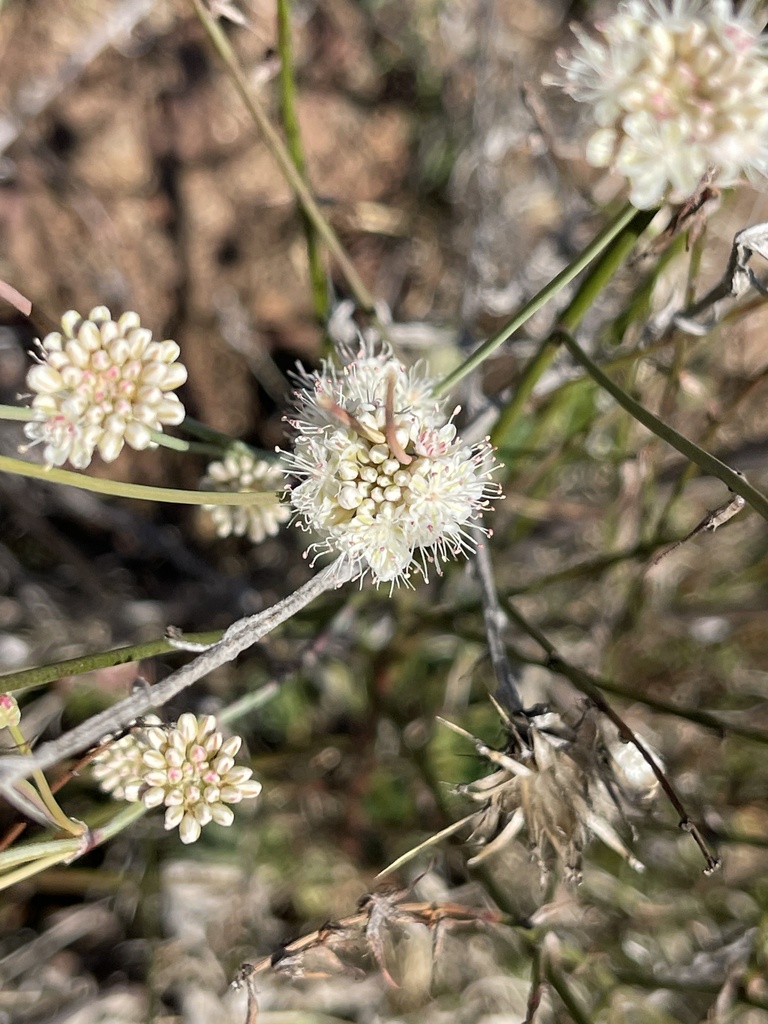
Naked Buckwheat
Eriogonum nudum var. auriculatum
Care
full sun
very low
Fast, Medium, Slow; Adaptable.
0–1ft tall , 0–0ft wide
Mar-Aug
Deciduous
Resistant
Friendly
Prized
Sierra Nevada and adjacent mountains from Modoc County south to Inyo County, between 3000-9000 ft elevation in dry meadows and sagebrush scrub.
Care Guide
Planting
Plant your Naked Buckwheat in full sun in a location with fast or medium drainage - it's extremely adaptable to different soil types, so focus on drainage over soil quality. Space plants to account for their mature height of up to six feet, and consider planting in groups for a striking massed effect. Plant in fall or early spring, and pair it with other drought-tolerant natives like California Buckwheat, White Sage, or Black Sage for a cohesive, pollinator-friendly garden.
After Planting
Water weekly during your first summer to establish the plant, then taper to once monthly or less once established - this is a very low water plant once it takes hold. Your biggest challenge in year one is weed control, so stay on top of weeds while the buckwheat is getting established. The plant is deciduous and cold-hardy to -10 to -15°F, so expect it to look dormant in winter; minimal pruning is needed. Avoid overwatering, which is the #1 way to kill this drought-adapted native.
Endangered & Threatened Species Supported
Listed under ESA; found only in San Bernardino County, California
Mojave Desert endemic; habitat loss and climate change concerns
California state threatened species
Listed under California ESA
Wildlife Supported
Insects
Larvae feed on inflorescences; key host plant for population persistence
Multiple generations utilize plant as primary larval host plant April-September
Primary larval host plant; critical for arid population survival
Multiple broods use plant; important secondary host in California foothills
Single brood uses developing seeds as food source June-August
Spring ephemeral specialist; critical early pollen source
Eggs laid on flower buds; single generation May-July
Larvae feed on developing inflorescences; June-August broods
+3 more species