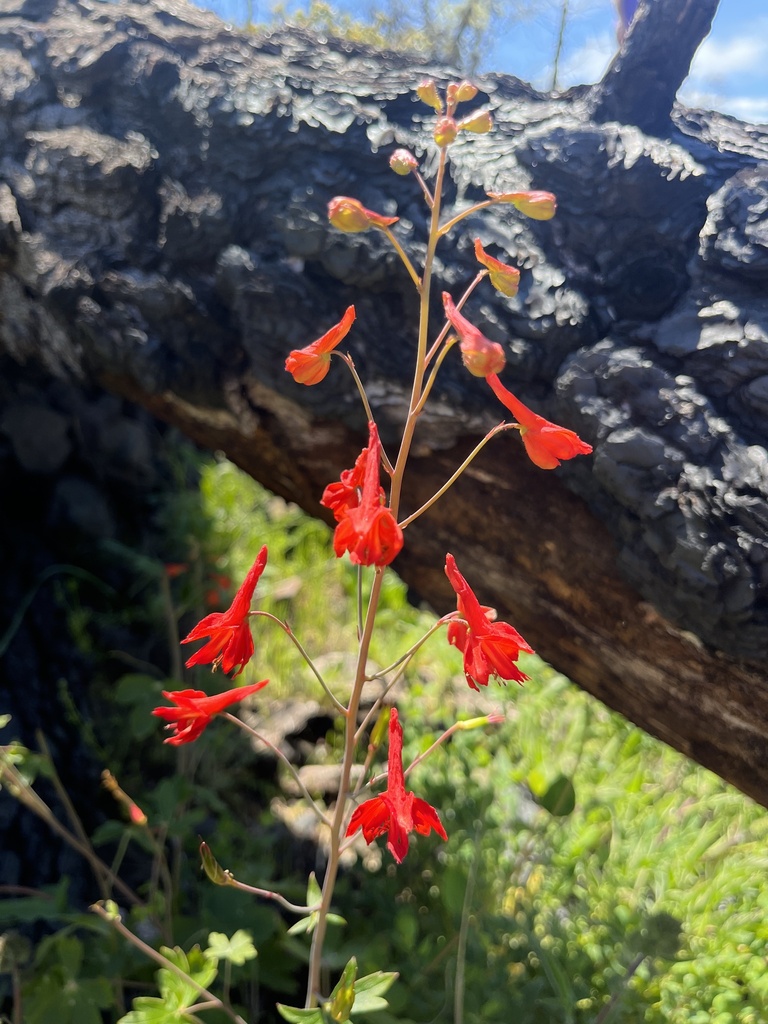
Red Larkspur
Delphinium nudicaule
Care
part shade
low
Slow; Prefers moist clay or heavy soil.
0–4ft tall
Mar-May
Friendly
Prized
Coastal regions from Mendocino County south to Santa Cruz County, below 1500 ft elevation in coastal scrub, oak woodland, and grassland.
Care Guide
Planting
Plant Red Larkspur in part shade with moist, heavy clay soil that drains slowly - this plant actually prefers wet feet, so don't amend your soil to make it drain faster. Space plants according to their mature height of 0.5–4.0 feet, keeping in mind they'll send up thin, stringy stems that look sparse on their own. Plant in fall or early spring to give roots time to establish before summer heat.
After Planting
Water regularly through your first summer and into the plant's establishment period; this native needs consistent moisture, especially in its clay soil home. Red Larkspur blooms March through May and will go dormant in summer heat - this is normal, not a sign of failure. The biggest mistake Bay Area gardeners make is planting this in full sun or sandy, fast-draining soil; it's a canyon plant that wants shade, clay, and moisture.
Endangered & Threatened Species Supported
Federal Threatened; California Endangered; Species of Special Concern
Wildlife Supported
Birds
Visit red/orange Delphinium flowers during breeding season Apr-Jun; important early spring nectar source for establishing territories
Utilize Delphinium flowers during breeding and pre-migration staging; critical fuel source May-Aug
Insects
Adult nectar foraging on Delphinium flowers; sustains multiple generations throughout warm season
Larvae feed on Delphinium species as secondary host plant when primary pipevine hosts unavailable; multiple generations Mar-Oct in California