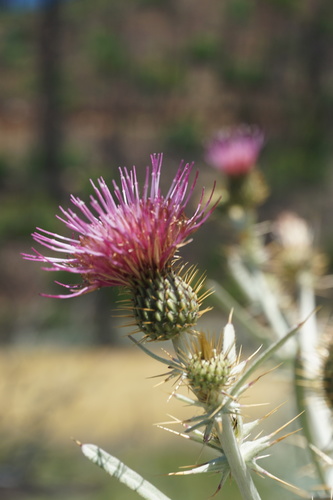
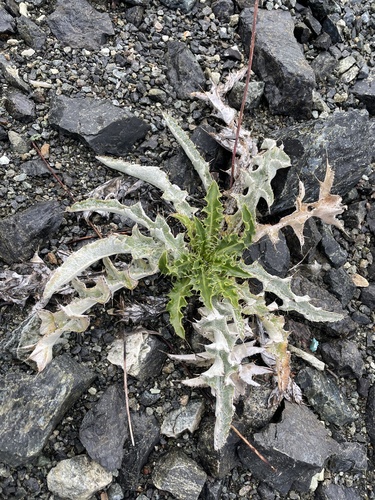
Douglas' Thistle
Cirsium douglasii var. douglasii
Care
7–16ft tall
Resistant
Young shoots cooked as vegetable; roots eaten
Coastal Ranges and Sierra Nevada of northern California from the Oregon border south to Kern County, typically between 1000-5000 ft elevation in grassland and open woodland.
Care Guide
Planting
Plant Douglas' Thistle in a location that mimics its native wet habitat - it thrives in moist conditions, so choose a spot with reliable moisture or where water naturally collects. Space plants to accommodate their mature height of 7 to 16 feet and their branching growth pattern. This biennial or short-lived perennial is deer resistant, making it a good choice if wildlife pressure is a concern in your garden.
After Planting
Year one, expect leafy basal growth with large gray-green leaves; flowering typically occurs in the second year. Since this is a biennial or short-lived perennial, plan for it to complete its lifecycle rather than treating it as a permanent garden fixture. The main challenge is overwatering in the wrong conditions - despite needing moisture in its native wet habitat, poor drainage in Bay Area gardens can cause root rot, so ensure your soil drains adequately even while staying consistently moist.
Endangered & Threatened Species Supported
Federal Threatened; California Endangered; Species of Special Concern
Wildlife Supported
Insects

Preferred host plant; multiple generations Mar-Oct; can be irruptive

Host plant for caterpillars; multiple generations Mar-Sep

Host plant for larvae; flight period Jun-Oct

Host plant for caterpillars; flight period May-Sep

Host plant for caterpillars; active Apr-Aug

Host plant for larvae; extended flight season May-Oct
Birds

Spring migration nectar source Feb-May; critical during northbound migration

Year-round resident; thistle nectar important for winter energy reserves

Nectar resource during breeding and migration periods