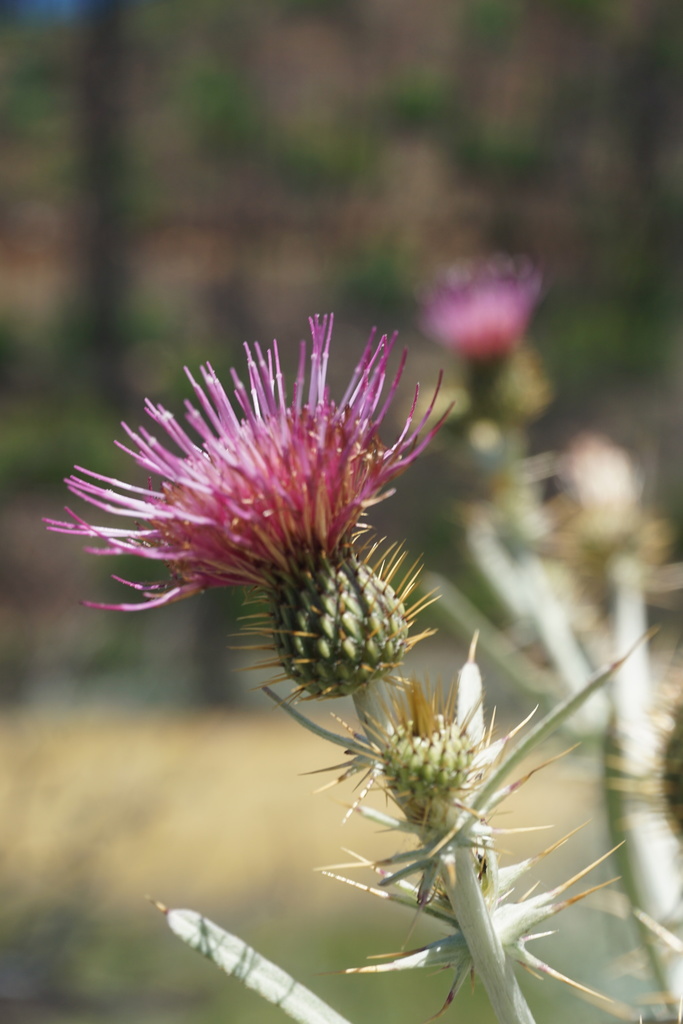
Douglas' Thistle
Cirsium douglasii var. douglasii
7–16ft tall
Young shoots cooked as vegetable; roots eaten
Coastal Ranges and Sierra Nevada of northern California from the Oregon border south to Kern County, typically between 1000-5000 ft elevation in grassland and open woodland.
Planting
Plant Douglas' Thistle in a location that mimics its native wet habitat - it thrives in moist conditions, so choose a spot with reliable moisture or where water naturally collects. Space plants to accommodate their mature height of 7 to 16 feet and their branching growth pattern. This biennial or short-lived perennial is deer resistant, making it a good choice if wildlife pressure is a concern in your garden.
After Planting
Year one, expect leafy basal growth with large gray-green leaves; flowering typically occurs in the second year. Since this is a biennial or short-lived perennial, plan for it to complete its lifecycle rather than treating it as a permanent garden fixture. The main challenge is overwatering in the wrong conditions - despite needing moisture in its native wet habitat, poor drainage in Bay Area gardens can cause root rot, so ensure your soil drains adequately even while staying consistently moist.
Federal Threatened; California Endangered; Species of Special Concern
Insects
Preferred host plant; multiple generations Mar-Oct; can be irruptive
Host plant for caterpillars; multiple generations Mar-Sep
Host plant for larvae; flight period Jun-Oct
Host plant for caterpillars; flight period May-Sep
Host plant for caterpillars; active Apr-Aug
Host plant for larvae; extended flight season May-Oct
Birds
Spring migration nectar source Feb-May; critical during northbound migration
Year-round resident; thistle nectar important for winter energy reserves
Nectar resource during breeding and migration periods
