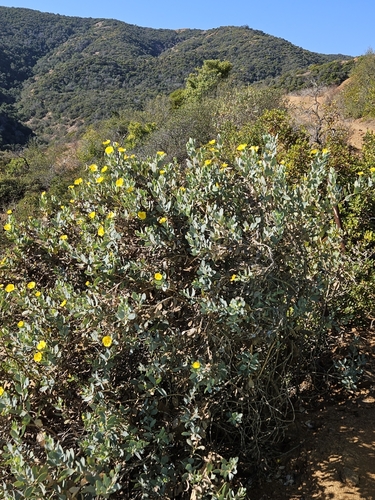
Island Bush Poppy
Dendromecon harfordii
Care
full sun
very low
well-drained, rocky; no summer water
4–10ft tall , 4–8ft wide
Mar-Jul · bright yellow
Evergreen
Resistant
Friendly
Prized
Channel Islands of California
Abundant bright yellow poppy-like flowers over a long season
Spectacular long bloom; needs excellent drainage; no summer water
Care Guide
Planting
Plant your Island Bush Poppy in full sun with well-draining soil - it tolerates sandy or clay soils as long as drainage is fast. Space it where it has room to grow; this is a fast grower that can reach 6 feet in two years. It does fine in dry part-shade too, though full sun will give you the most flowers. Plant in fall or winter if possible to take advantage of the rainy season.
After Planting
Water weekly or regularly during your first two summers - the plant is very tolerant of summer water while young. Once established (after year two), cut back to once monthly or stop supplemental watering entirely, especially if your plant is in part-shade. The #1 mistake is overwatering a mature plant; Island Bush Poppy wants dry conditions once it's settled in, so resist the urge to keep it moist like you did the first year.
Endangered & Threatened Species Supported
Island endemic; critically endangered
Sonoran bumblebee, California candidate
Wildlife Supported
Birds

Spring migration and early breeding season nectar source

Early spring blooms provide critical nectar Mar-May during breeding season
Insects

Dense evergreen foliage provides cover for insects and small arthropods

Primary nectar source during early spring bloom Mar-Apr for colony establishment

Spring blooms provide essential pollen for brood rearing Mar-May
Phloem-feeding insect on evergreen foliage throughout year

Extended summer bloom provides late-season nectar Jun-Jul

Early season nectar source Mar-May

Spring pollen source for adult nutrition and egg-laying periods

Adult flies visit flowers spring-early summer for nectar
+1 more species