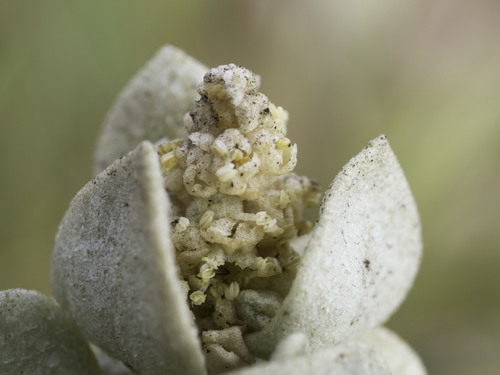
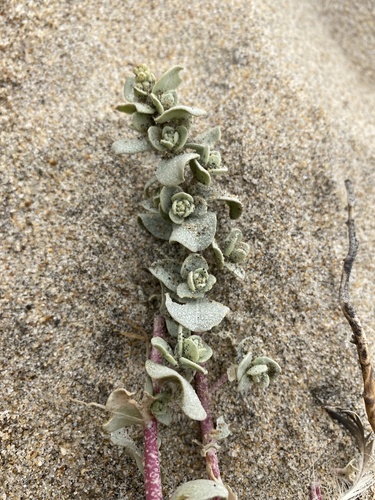
Beach Saltbush
Atriplex leucophylla
Care
full sun
very low
Fast; Prefers beach sand.
1–1ft tall
Mar-Nov
Evergreen
Friendly
Seeds eaten raw or cooked; leaves used as salt substitute
Coastal beaches and salt marshes from Humboldt County to San Luis Obispo County, below 100 ft elevation
Care Guide
Planting
Plant beach saltbush in full sun with fast-draining soil - ideally beach sand or a sandy mix that mimics its native coastal dune habitat. Space plants about a meter apart to accommodate their sprawling growth habit. Plant in spring to give the plant time to establish before summer. This low-growing perennial (reaching about 1 foot tall) spreads along the ground, so give it room to sprawl without crowding other plants.
After Planting
Water very sparingly once established; this is an extremely low-water plant adapted to sandy, dry coastal conditions, so err on the side of underwatering rather than overwatering. The #1 mistake is watering too much - saltbush planted in amended soil with regular water often fails. After year one, you should rarely need to water except during extreme drought. Prune lightly if needed to control spread, though the plant naturally stays low and manageable.
Endangered & Threatened Species Supported
Western Pygmy Blue butterfly; California species of special concern
Wildlife Supported
Insects

Multiple generations per year; larvae feed on plant foliage

Gall-forming midge; larvae develop within plant tissues

Larvae feed on foliage; univoltine or bivoltine depending on location