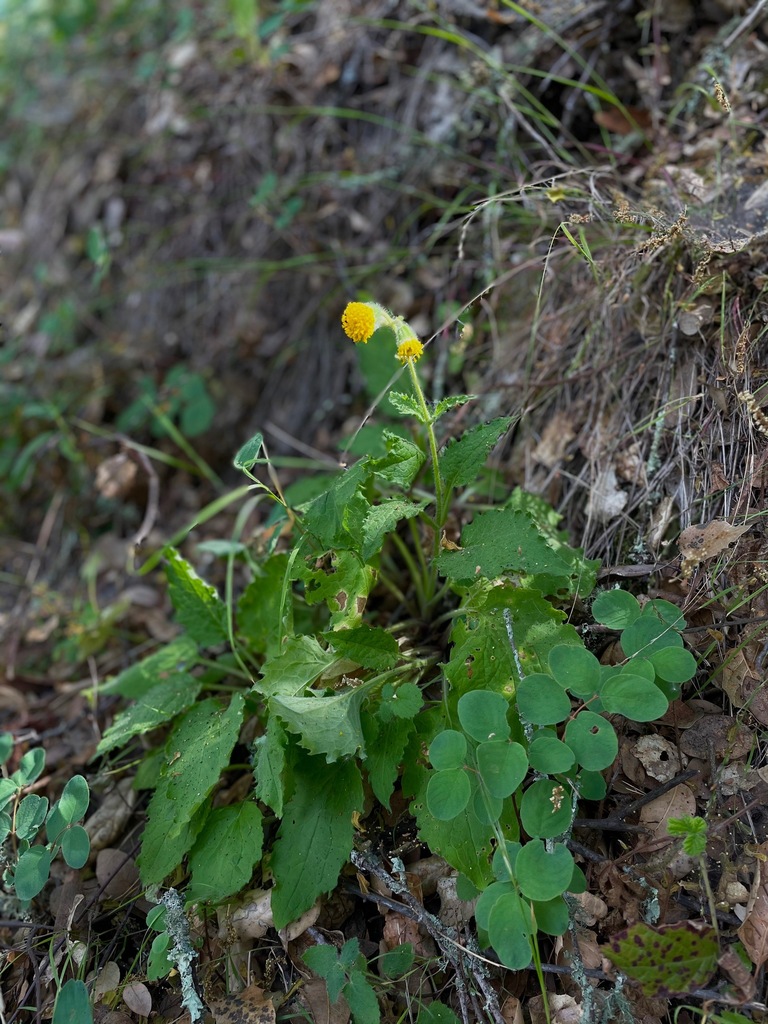
Rayless Arnica

Arnica discoidea

perennial herbView on Calscape
Care
Sun

part shade

Size

1–2ft tall

Deer

Resistant

Container

Friendly

Native Range

North Coast and Cascade-Sierra region from Humboldt County to Modoc County, 2000-5000 ft elevation, in mixed conifer forests

Care Guide

Planting

Plant rayless arnica in partial shade, where it will thrive in Bay Area woodland and chaparral conditions. Space plants to accommodate their mature height of 1–2 feet. Plant in fall or winter when the soil is moist and the plant can establish its rhizomatous root system before the dry season.

After Planting

Water regularly during the first growing season to help the plant establish. Once established, rayless arnica is deer resistant and adapted to survive with minimal supplemental water, making it a low-maintenance choice for native gardens. The plant is a perennial that will emerge from its rhizomes each year, so avoid disturbing the soil around the plant's base.

Visit Calscape for more information about Rayless Arnica

Endangered & Threatened Species Supported
Chalcedon CheckerspotEuphydryas chalcedona

California Species of Special Concern

CA Special Concern
Wildlife Supported

Insects

Larval Host · Year-Round

Caterpillars feed on arnica leaves during spring-early summer development

Foliage · Summer

Adults feed on arnica foliage during peak growing season

Mammals

Foliage · Year-Round

Harvest arnica during hay-making season for winter cache

Foliage · Summer

Graze in alpine and subalpine meadows where arnica occurs

Foliage · Year-Round

Browse arnica foliage during spring green-up and early summer

Where to Buy
Native Here Nursery

101 Golf Course Dr, Tilden Regional Park, Berkeley

Sat 10am-2pm

3.0 mi(510) 549-0211WebsiteDirections