← Back to results

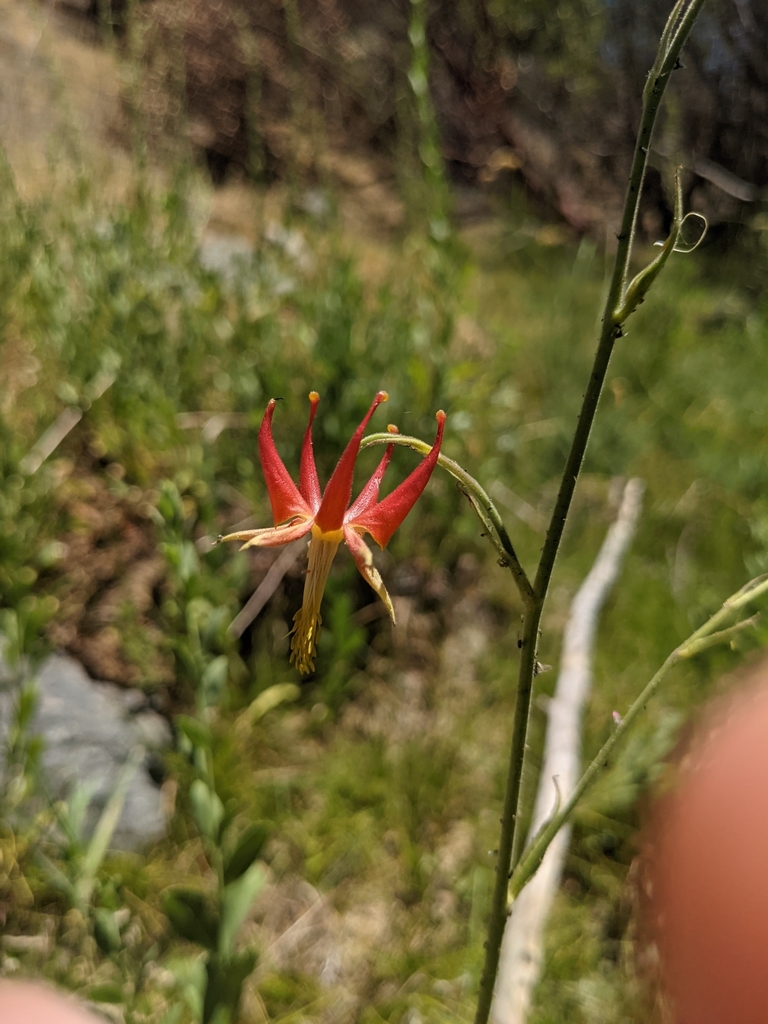
Van Houtte's Columbine

Aquilegia eximia

perennial herb View on Calscape

Care

Sun

part shade

Water

moderate

Soil

Medium, Slow; Often found in serpentine soil but also does well in clay loam. Tolerates serpentine soil..

Size

0–5ft tall

Bloom

Mar-Nov

Container

Friendly

Flowers

Prized

Native Range

North Coast ranges from Humboldt County to Sonoma County, 500-2500 ft elevation, in riparian canyons and redwood forest understory

Care Guide

Planting

Plant Van Houtte's Columbine in partial shade to deep shade - it thrives in the moist forest understory conditions of the California Coast Ranges where it naturally grows. It tolerates clay loam and even serpentine soil, and actually prefers soil that drains slowly to moderately, so you don't need to amend for drainage. Plant in spring for best establishment, spacing plants to accommodate their mature height of up to 5 feet.

After Planting

Water moderately during your first growing season to establish the plant, then reduce frequency as it matures and the root system develops. This is a perennial that grows from a thick caudex (a woody base), so it may take a year or two to really fill out before you see robust spring flowers. The biggest mistake Bay Area gardeners make is overwatering - this plant comes from moist forests but not swamps, so let the soil dry out slightly between waterings rather than keeping it constantly wet.

Visit Calscape for more information about Van Houtte's Columbine

Endangered & Threatened Species Supported

California Dogface Butterfly Zerene eurydice
Federal: Threatened, CA: Endangered, CA Special Concern

Federal Threatened; California Endangered; Species of Special Concern

Wildlife Supported

Birds

Nectar · Spring

Early spring breeding season; critical nectar source during courtship and nesting

Nectar · Spring

Spring migration and early breeding; important staging resource

Nectar · Spring

Spring northbound migration fuel source; visits California populations

Insects

Larval Host · Spring

Larval host plant for spring and early summer generations

Nectar · Spring

Spring through early summer foraging and pollination

mod Honey bee
Nectar · Spring

Spring nectar and pollen source during colony buildup

Pollen · Spring

Spring pollen feeding during flowering period

Nectar · Spring

Spring adult feeding on nectar; predator of flower-visiting insects

Where to Buy

East Bay Wilds

2110 Eighth St, Suite 202, Berkeley

Fri 9:30am-4pm (occasional Sat, call ahead)

1.5 mi (510) 409-5858 Website
Native Here Nursery

101 Golf Course Dr, Tilden Regional Park, Berkeley

Sat 10am-2pm

3.0 mi (510) 549-0211 Website
Curious Flora

12040 San Pablo Ave, Richmond

Daily 9am-4pm

7.0 mi (510) 215-3301 Website