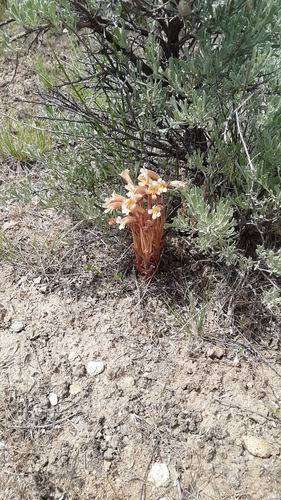
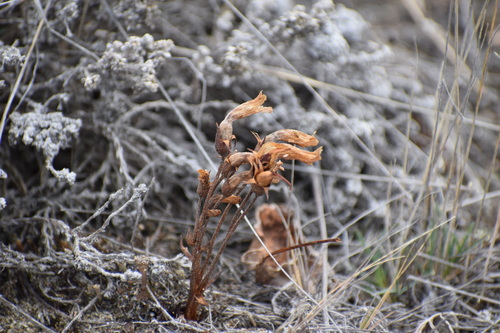
Clustered Broomrape
Aphyllon fasciculatum
Care
full sun, part shade
0–0ft tall
Friendly
San Francisco Bay Area foothills from Marin County to Santa Clara County, below 2000 ft elevation, in chaparral and grasslands
Care Guide
Planting
Plant clustered broomrape in full sun where you have Asteraceae family plants (like Artemisia, Eriodictyon, or Eriogonum) already established - this plant is a parasite and must attach to the roots of a host plant to survive. Space it near the base of your chosen host plant. The timing and soil requirements are not specified in available data, so consult with a native plant nursery in your area about optimal planting conditions for your specific host plant.
After Planting
Clustered broomrape depends entirely on its host plant for nutrients and water, so your main job is keeping the host plant healthy and established. Beyond that, very little care information is available for this species. Your #1 mistake would be planting it without a suitable host plant present - the parasite will not survive on its own.
Visit Calscape for more information about Clustered Broomrape
Endangered & Threatened Species Supported
California Species of Special Concern
Wildlife Supported
Insects

Larvae feed on plant tissues in spring; chrysalis formation follows