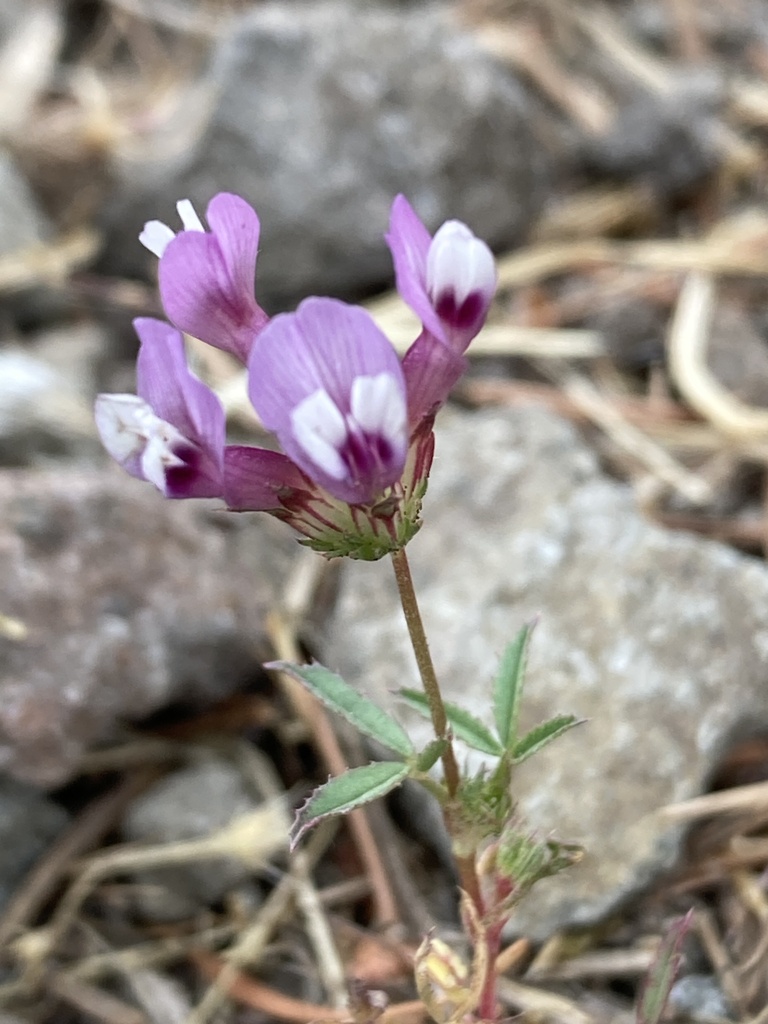
Willdenow's Clover
Trifolium willdenovii
Care
full sun
low
Medium, Slow; clay tolerant.
Mar-May
Friendly
Prized
Leaves eaten raw in salads; seeds used as food
Central Valley and surrounding foothills from Kern County to Tehama County, below 2000 ft elevation, in grasslands and open woodlands
Care Guide
Planting
Plant Willdenow's Clover in full sun during fall or early spring when Bay Area rains arrive - this annual thrives with natural moisture. It tolerates clay soil and prefers medium to slow drainage, so you don't need to amend heavy soils. Space it as a ground cover between maturing native shrubs, perennials, or bunch grasses where it can fill gaps with seasonal color.
After Planting
Water regularly through the first growing season until established, then back off to just twice a month during summer once the plant is thriving. Expect lavender to purple flowers in spring (March through May) followed by abundant reseeding - let some go to seed if you want it to return next year, or pull plants after flowering if you prefer to manage it. Since this is an annual, the main mistake is overwatering in summer when the plant naturally wants to dry out; once established, it needs very little from you.
Visit Calscape for more information about Willdenow's Clover
Wildlife Supported
Insects
Larvae feed on clover flowers and developing seed pods
Multiple generations utilize clover as larval food plant throughout growing season
Fungal pathogen; may reduce plant vigor but rarely fatal
Polyphagous but utilizes Trifolium as larval food source multiple generations
Native bee uses clover pollen for larval provisions
Native ground-nesting bee specializing on clover pollen