← Back to results

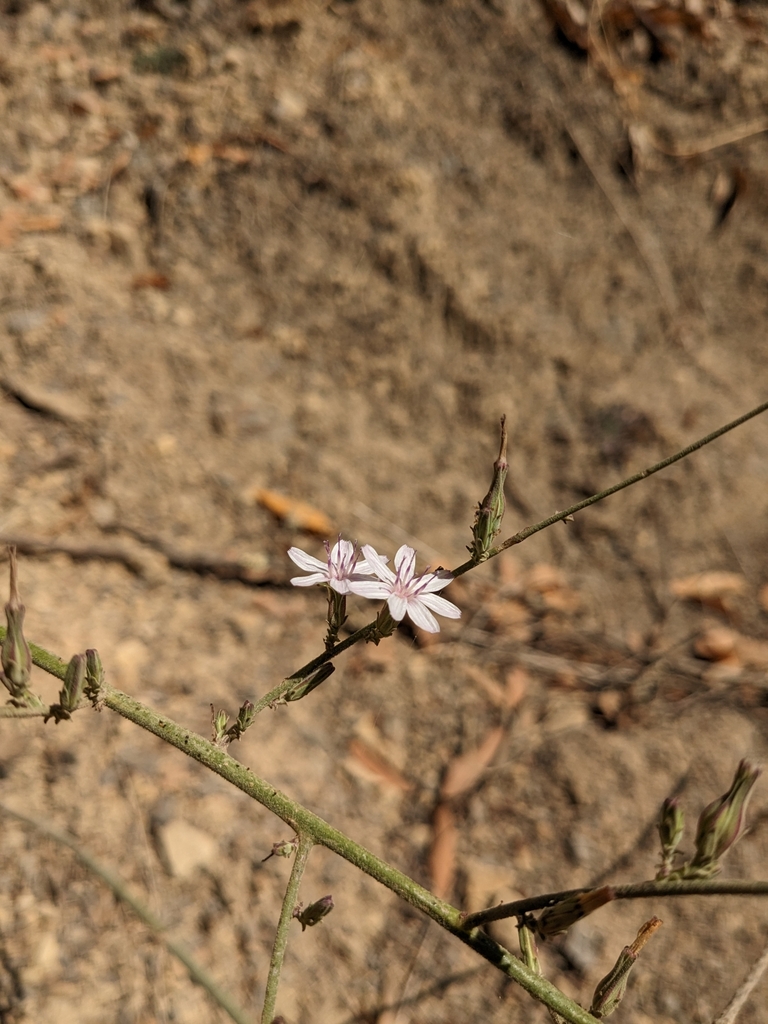
Rod Wirelettuce

Stephanomeria virgata subsp. pleurocarpa

Care

Sun

full sun

Size

2–12ft tall

Native Range

Southern California from Ventura County to San Diego County, below 1500 ft elevation, in chaparral and coastal scrub

Care Guide

Planting

Plant rod wirelettuce in full sun in a dry, well-draining location - this is a desert and chaparral native that thrives in the kind of spot where other plants struggle. Since it's an annual, you can direct sow seeds or plant seedlings in spring when soil has warmed up. Space plants to accommodate their eventual height and branching habit, which can reach up to 12 feet tall with dense lateral growth.

After Planting

Rod wirelettuce is an easy-care plant once established in appropriate conditions - no pampering required. After blooming finishes, cut the plant back once you're done enjoying the flowers; if you want it to reseed itself for next year, allow some flower heads to develop and drop their seeds naturally. Since this is an annual, expect it to complete its life cycle in a single season and plan accordingly for next year's planting.

Visit Calscape for more information about Rod Wirelettuce

Wildlife Supported

Insects

Larval Host · Year-Round

Multiple generations through growing season; larvae feed on plant foliage

Larval Host · Year-Round

Polyphagous species; larvae develop on Stephanomeria foliage

Larval Host · Year-Round

Multiple generations; larvae feed on plant material

Shelter · Year-Round

Uses plant structure for hunting ambush; predator of herbivorous insects

Larval Host · Year-Round

Larval host plant; nocturnal moth species

Larval Host · Year-Round

Larval host plant relationship

Larval Host · Year-Round

Early season larval host plant; larvae develop on foliage

Where to Buy

Native Here Nursery

101 Golf Course Dr, Tilden Regional Park, Berkeley

Sat 10am-2pm

3.0 mi (510) 549-0211 Website