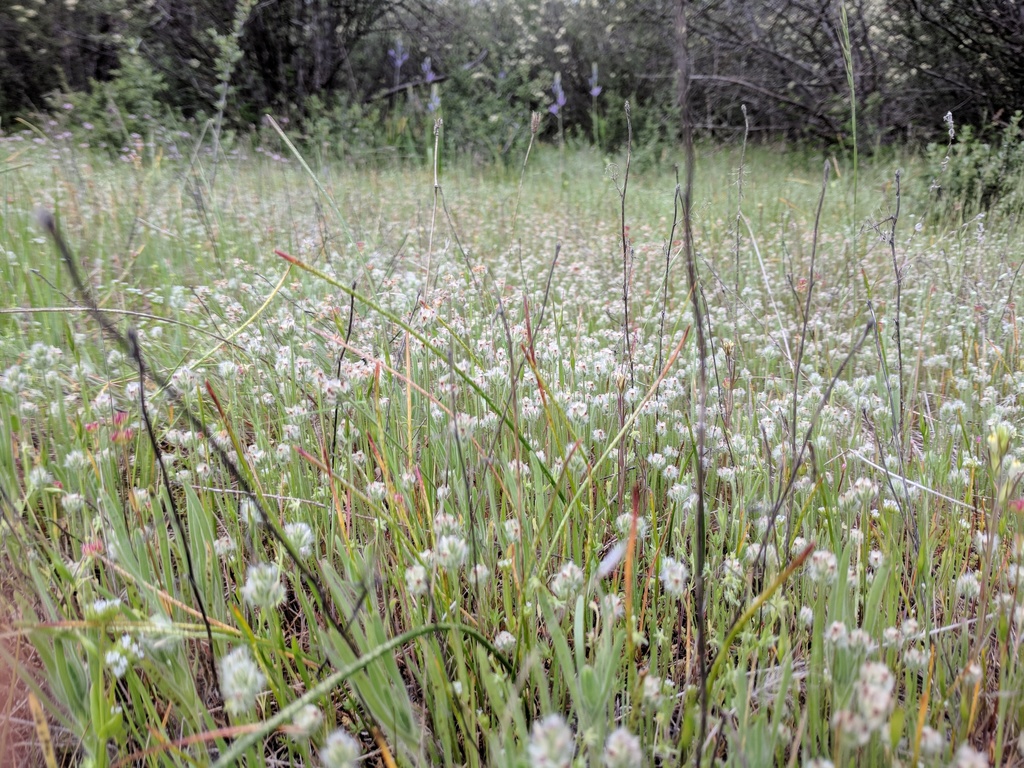
Dotseed Plantain
Plantago erecta
Care
full sun, part shade
very low
Fast, Medium, Slow; Adaptable.
0–0ft tall
Mar-May
Friendly
Widespread throughout California's Central Valley, Coast Ranges, and inland valleys below 2000 ft, in grasslands and disturbed areas
Care Guide
Planting
Plant Dotseed Plantain in fall or early spring in full sun with fast to slow-draining soil - this annual is adaptable to sandy, clay, or even serpentine soils, so drainage flexibility is a major plus. Space plants 6–8 inches apart and choose a spot where they'll stay relatively dry once established. This Bay Area native thrives in the same conditions as your local chaparral or foothill woodlands, making it an easy fit alongside other drought-tolerant plants.
After Planting
Water weekly for the first 4–6 weeks after planting to establish roots, then cut back dramatically - this plant needs very low water and will thrive on rainfall alone once settled in. Expect blooms from March through May, and let the plant go dormant or die back naturally after flowering; no pruning is needed. The #1 mistake is overwatering: Dotseed Plantain evolved to handle dry Bay Area summers, so resist the urge to coddle it once it's established.
Endangered & Threatened Species Supported
Listed under ESA; California populations endangered; multiple subspecies with varying conservation status
California Species of Special Concern
Wildlife Supported
Insects
Caterpillar development on Plantago erecta in vernal pool margins and grasslands
Critical spring host plant; caterpillars develop on young Plantago erecta foliage
Caterpillars feed on Plantago erecta leaves in early spring after host plant emergence
Caterpillars utilize Plantago erecta as alternative host plant in spring
Caterpillars feed on plantain species during spring breeding season
Hover fly larvae potentially feed on Plantago erecta; adults may utilize floral resources
Caterpillar host plant; feeds on young Plantago erecta foliage
Birds
Feeds on Plantago erecta seeds; particularly important in late spring/early summer seed maturation