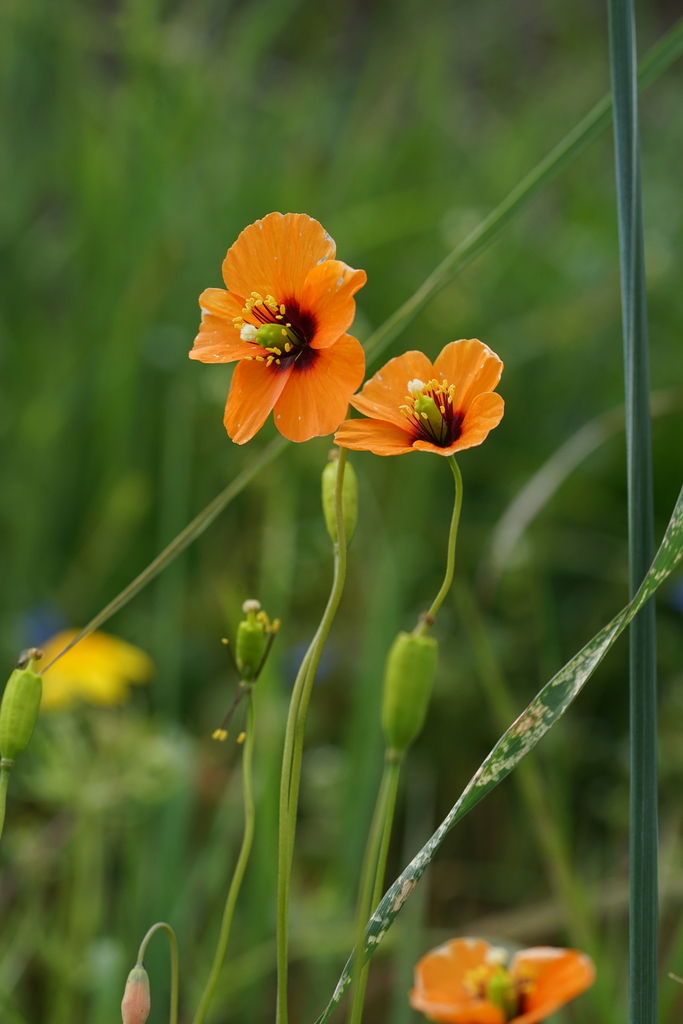
Windpoppy
Papaver heterophyllum
Care
part shade
very low
Fast, Medium, Slow; Adaptable.
1–2ft tall
Mar-May
Friendly
Prized
Coastal grassland and scrub from San Francisco Bay Area to Kern County, below 2000 ft elevation
Care Guide
Planting
Plant windpoppy in partial shade with fast-draining soil - it's adaptable to various soil types but demands good drainage. You can plant it in fall or early spring to take advantage of the Bay Area's natural winter and spring moisture. Space plants about 12–18 inches apart, and consider placing them under oak trees where they thrive as understory plants, or in foothill-style gardens that mimic their native Sierra and Coast Range habitat.
After Planting
Water young plants regularly through their first growing season, then taper off once established - by summer of year two, you should only need to water them a maximum of twice per month. Windpoppy is an annual that flowers in spring (March through May), so expect it to decline as temperatures warm; this is normal dormancy, not a sign of failure. The biggest mistake is overwatering: this plant evolved in dry foothill areas, so err on the side of dry soil rather than wet.
Endangered & Threatened Species Supported
Listed under ESA; California Species of Special Concern
Wildlife Supported
Insects
Spring wildflower foraging for colony nutrition
Early spring foraging during post-winter emergence
Adult flies visit flowers for pollen and nectar in early spring bloom period
Adults forage on pollen during flowering period
Birds
Migrant seed consumption during fall passage through California grasslands
Year-round resident utilizing seed resources in chaparral and coastal sage scrub habitats
Mammals
Seed collection and caching for winter stores September-November