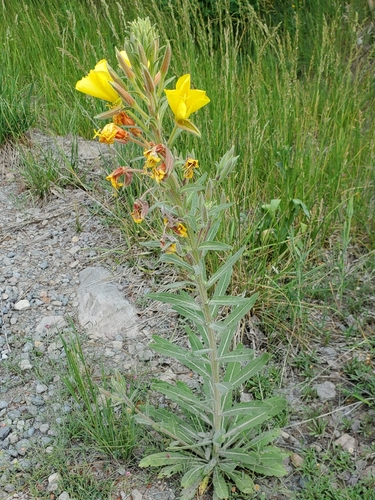
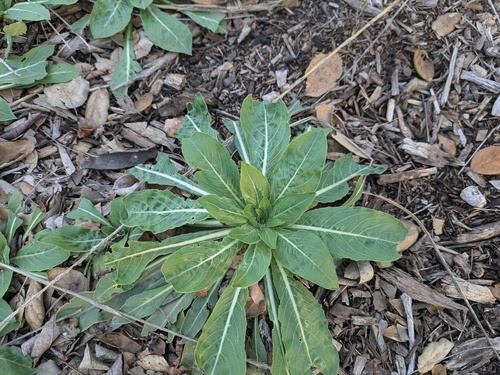
Hooker's Evening Primrose
Oenothera elata subsp. hookeri
Care
full sun, part shade
low
Medium, Slow; Tolerates virtually any soil.
5–5ft tall , 3–3ft wide
Jun-Nov
Yes
Prized
Coastal bluffs and grassland from Humboldt County to Santa Barbara County, sea level to 1000 ft elevation
Care Guide
Planting
Plant Hooker's Evening Primrose in full sun or part shade in spring or fall. It's unfussy about soil - it tolerates virtually any type, including poor drainage - so amend only if you want to. Space plants about 2-3 feet apart to accommodate the basal rosette, and choose a spot where you're willing to pull seedlings, since this plant self-sows prolifically.
After Planting
Water weekly during the first summer, then taper to once weekly or less once established - this plant is surprisingly drought tolerant and needs minimal water after year one. In winter, you can prune it hard to control the tall, rangy growth (it reaches 3-5 feet), and it will recover quickly; this is also when woody stems develop with age. Expect flowers in summer and fall of the second year onward, and be prepared to deadhead or pull seedlings throughout the growing season to prevent unwanted spread. The #1 mistake: overwatering - this drought-tolerant plant actually prefers dry conditions once established, so let it dry out between waterings.
Visit Calscape for more information about Hooker's Evening Primrose
Endangered & Threatened Species Supported
California Dogface butterfly, state insect
Wildlife Supported
Birds

Primary nectar source especially during breeding season Feb-May and winter resource

Critical spring migration fuel source Mar-Apr for northbound migrants

Seed consumption Aug-Oct during post-breeding dispersal

Spring migration stopover nectar resource Apr-May
Insects

Specialist larval host for caterpillar development

Adult nectar source, multiple broods spring through fall

Warm-season nectar forager with multiple generations

Multi-brooded species using flowers throughout growing season

Adult pollen feeding Jun-Jul
Larval host plant for caterpillar development