← Back to results

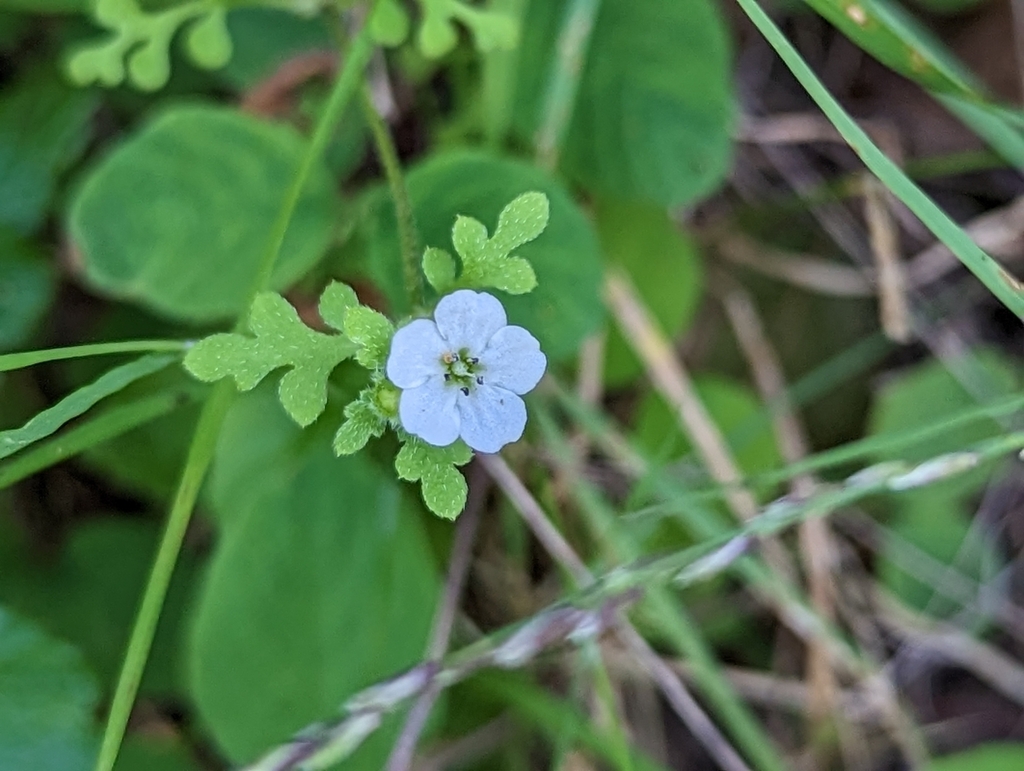
Small Baby Blue Eyes

Nemophila heterophylla

Care

Sun

full sun, part shade

Water

low

Soil

well-draining, sandy or gravelly soil

Size

0–0ft tall , 0–1ft wide

Bloom

Mar-May

Foliage

Deciduous

Deer

Resistant

Container

Friendly

Flowers

Prized

Native Range

Coastal scrub and grassland of central California from Monterey County to San Luis Obispo County, below 2000 ft elevation

Care Guide

Planting

Plant Small Baby Blue Eyes in fall or early spring in a spot with full sun to part shade. It needs well-draining soil - sandy or gravelly soil is ideal, so amend heavy clay with sand or gravel before planting. Space plants about 4–8 inches apart since they stay small (under a foot tall). This California native is tough enough for Bay Area conditions and doesn't need rich soil.

After Planting

Water weekly during the first growing season to establish the plant, then taper off as it matures since it's a low-water plant once established. Let the soil dry between waterings - overwatering is the main killer of this delicate annual. Expect blooms from March through May, and remember this is a deciduous annual, so it will naturally die back after flowering and seeding; you don't need to do much pruning beyond deadheading spent flowers if you want to extend the bloom period.

Visit Calscape for more information about Small Baby Blue Eyes

Endangered & Threatened Species Supported

California ringlet butterfly Coenonympha california
CA: Threatened

California state threatened species

Wildlife Supported

Insects

Larval Host · Spring

caterpillar development on foliage during spring blooms

Pollen · Spring

pollen foraging during plant flowering period

Pollen · Spring

pollen collection for larval provisions

Pollen · Spring

indirect food plant for bee nesting sites

mod Diva moth
Larval Host · Spring

caterpillar host plant during early spring

Larval Host · Spring

plant association through parasitoid ecology

Larval Host · Spring

caterpillar feeding on emerging foliage

Larval Host · Spring

larval development on foliage during spring growth period

+1 more species

Where to Buy

Native Here Nursery

101 Golf Course Dr, Tilden Regional Park, Berkeley

Sat 10am-2pm

3.0 mi (510) 549-0211 Website