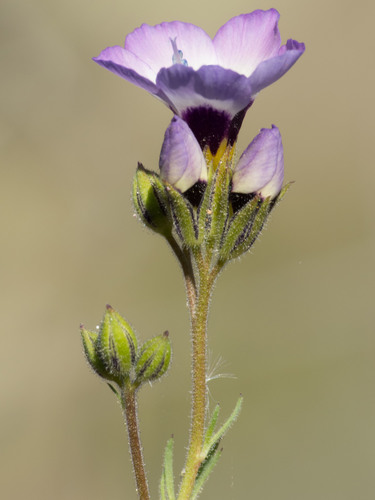
Bird's-eye Gilia
Gilia tricolor subsp. tricolor
Care
full sun
low
Fast, Medium, Slow; Tolerates a variety of soils including clay.
0–1ft tall , 0–0ft wide
Mar-Aug
Friendly
Prized
Valley and foothill grassland of the Central Valley and surrounding foothills from Shasta County to Kern County, 200-3000 ft elevation
Care Guide
Planting
Plant Bird's-eye Gilia in full sun - it won't bloom well in shade. This annual tolerates nearly any soil type, including clay, and doesn't demand perfect drainage, so don't overthink soil prep. Sow seeds in spring for blooms starting that season, or let it self-seed naturally each fall for reliable volunteer plants the following year. Space plants about 6 inches apart so the soft, lacy foliage has room to fill out.
After Planting
Once established, this is genuinely low-maintenance: water sparingly after germination and let the Bay Area's spring rains do most of the work. You don't need to deadhead or prune - just let it bloom from spring through summer until it naturally declines. The biggest mistake is overwatering; treat it like you'd treat a native wildflower, not a thirsty annual bedding plant. Let plants go to seed in late summer if you want them to return next spring on their own.
Endangered & Threatened Species Supported
Known from very limited California locations
California Species of Special Concern
California Species of Special Concern; population fluctuations noted
Wildlife Supported
Insects

Native bee species collecting pollen for larval provisions

Butterfly utilizes wildflower nectar resources during flight season

Adult butterfly nectar foraging on wildflowers

Adult moth forages on flowers for nectar

Fungal pathogen parasitizing plant tissue

Small moth foraging on flowers for nectar