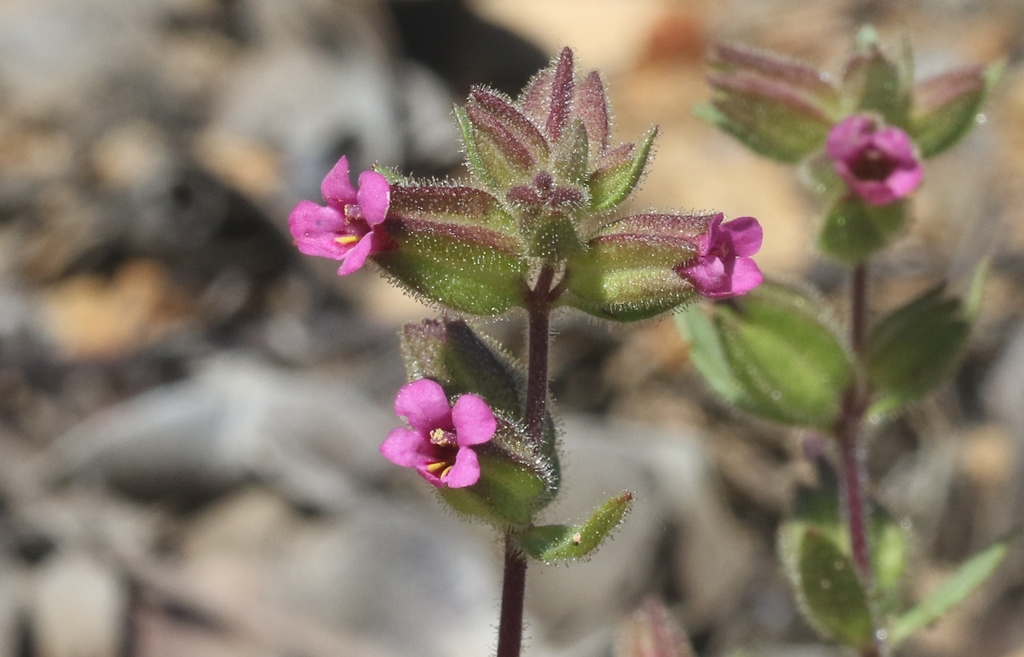
Desert Monkeyflower*
Diplacus rattanii
Care
high
0ft tall
Resistant
Friendly
Prized
Desert washes and scrub of the western Mojave Desert and southern Sierra Nevada foothills, 2000-5000 ft elevation
Care Guide
Planting
Plant Desert Monkeyflower in full sun in well-draining soil - it thrives in the rocky, disturbed habitats of California's Coast Ranges, so drainage matters more than fertility. This is a tiny annual (typically under 6 inches tall), so you can tuck it into rock gardens, along pathways, or in areas where you want delicate magenta flowers with yellow throat markings. Space plants a few inches apart since they won't get large. Plant in fall or early spring to take advantage of the rainy season.
After Planting
Water regularly during your first growing season to help it establish, then let it find its footing - this is a drought-tolerant species once settled. Because it's an annual, expect it to bloom, set seed, and complete its life cycle within a year; you may see volunteer seedlings return the following season if conditions are right. The main mistake is overwatering or planting it in heavy clay soil; remember it evolved in rocky outcrops and post-fire clearings, not lush garden beds.
Visit Calscape for more information about Desert Monkeyflower*
Endangered & Threatened Species Supported
Endemic to Kern County; habitat loss from agriculture
Wildlife Supported
Insects
Key pollinator during spring bloom
Spring and early summer visitors
Incidental nectar feeders during bloom
Collect pollen during blooming season
Visits flowers during active blooming season
Early spring foraging resource
Primary nectar source during bloom period for native bees