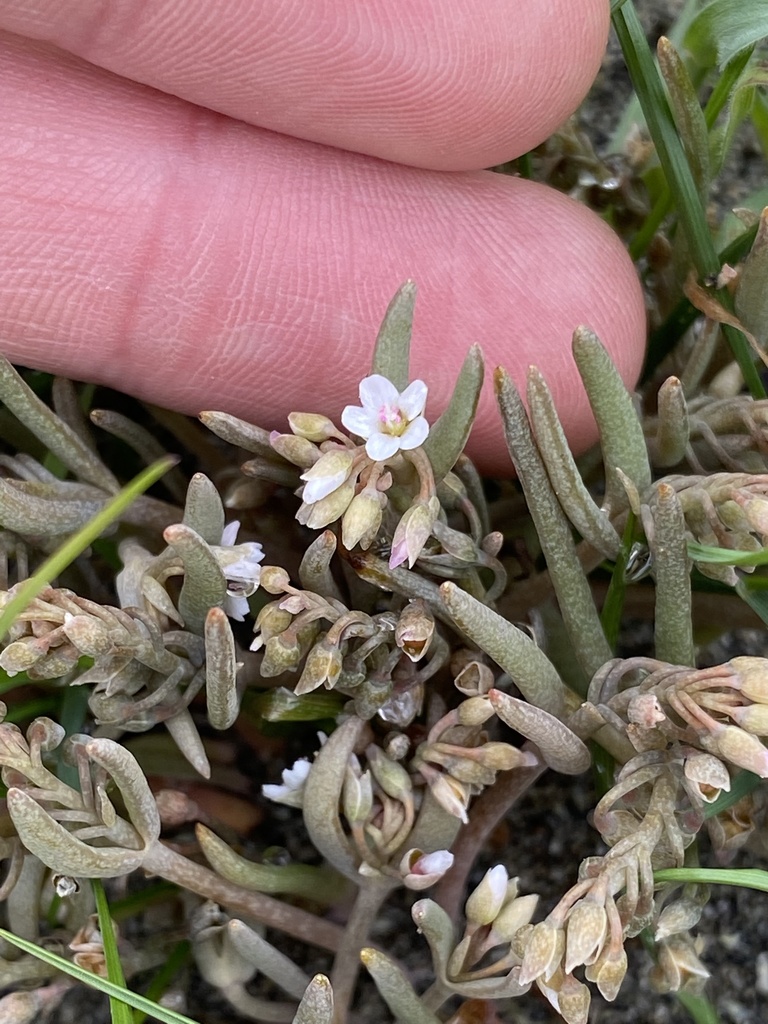
Pale Claytonia
Claytonia exigua subsp. exigua
Care
0–0ft tall
Friendly
Prized
Leaves eaten raw in salads or cooked as potherb
Valley grassland and scrub throughout interior California from the Central Valley to the Mojave Desert, below 5000 ft elevation
Care Guide
Planting
Plant Pale Claytonia in early spring to catch its natural growing season. This delicate annual wildflower is native to serpentine soils and other western North American habitats, so it tolerates lean conditions that many ornamentals won't - avoid amending your soil heavily. Space plants a few inches apart; they stay quite small, reaching only about 6 inches tall at maturity.
After Planting
Since Pale Claytonia is an annual herb, expect it to complete its life cycle in a single season, blooming with delicate pink, white, or pink-streaked flowers before setting seed and declining. Let the plant dry out between waterings once established, as its fleshy, waxy leaves are built for low-moisture conditions. The biggest mistake is overwatering this drought-tolerant annual - treat it like the lean-soil wildflower it is, and it will thrive.
Wildlife Supported
Insects
Early spring forager on Claytonia exigua flowers, critical early-season pollen source
Genus Andrena utilizes spring ephemerals like Claytonia for early season forage
Birds
Post-dormancy foraging on small annual seeds in spring
Mammals
Spring foraging on small seeds of spring ephemerals
Seasonal seed predator of small annual plants in spring