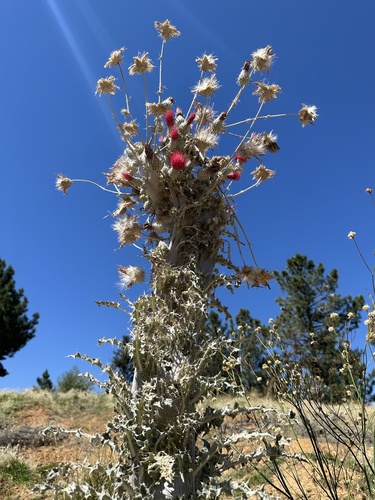
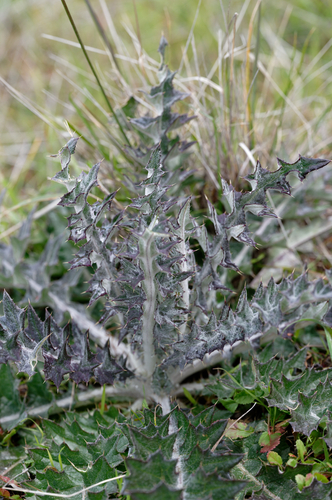
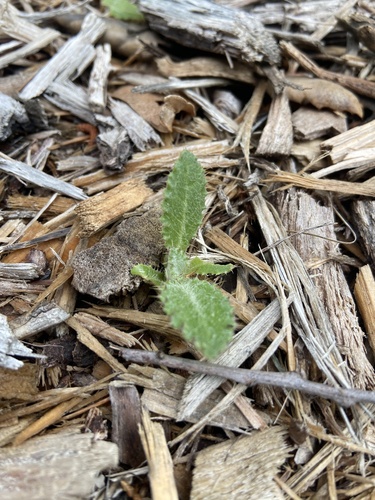
Cobwebby Thistle
Cirsium occidentale var. venustum
Care
full sun, part shade
very low
Fast, Medium, Slow; Adaptable.
2–10ft tall
Mar-Aug
Resistant
Friendly
Prized
Young shoots eaten cooked; traditionally harvested as food plant
Coastal scrub and grassland of coastal San Luis Obispo and Santa Barbara Counties, below 2500 ft elevation
Care Guide
Planting
Plant your Cobwebby Thistle in full sun with fast-draining soil - it's adaptable to various soil types but will not tolerate wet feet. Space it where it has room to grow, since mature plants range from 2 to 10 feet tall and can expand significantly. Plant in fall or early spring to establish before summer bloom.
After Planting
Water very lightly once established; this plant thrives on minimal irrigation and actually prefers dry conditions. Expect the first year to be a rosette of gray, woolly leaves with no flowers - blooming happens in year two (summer through early fall). The biggest mistake is overwatering, which invites rot and negates this plant's whole appeal as a low-maintenance, drought-tolerant native. Once established, step back and let it do its thing, and enjoy the butterflies and hummingbirds it will attract.
Endangered & Threatened Species Supported
Some subspecies federally protected; species has state endangered designation
Wildlife Supported
Insects

Multiple generations use thistle as primary larval host plant; critical during population irruptions

Specialist bee collecting pollen from thistle flowers; critical larval food provision

Caterpillars feed on Cirsium species as larval host in early season
Larval development on thistle foliage

Caterpillars develop on various Apiaceae and related plants

Adults feed on pollen; also predate aphids on thistle foliage

Specialist pollen collector on thistle flowers

Larvae feed on thistle foliage
+1 more species
Birds

Utilizes thistle blooms for high-energy nectar source during breeding and non-breeding seasons

Critical spring arrival and fall migration staging fuel source