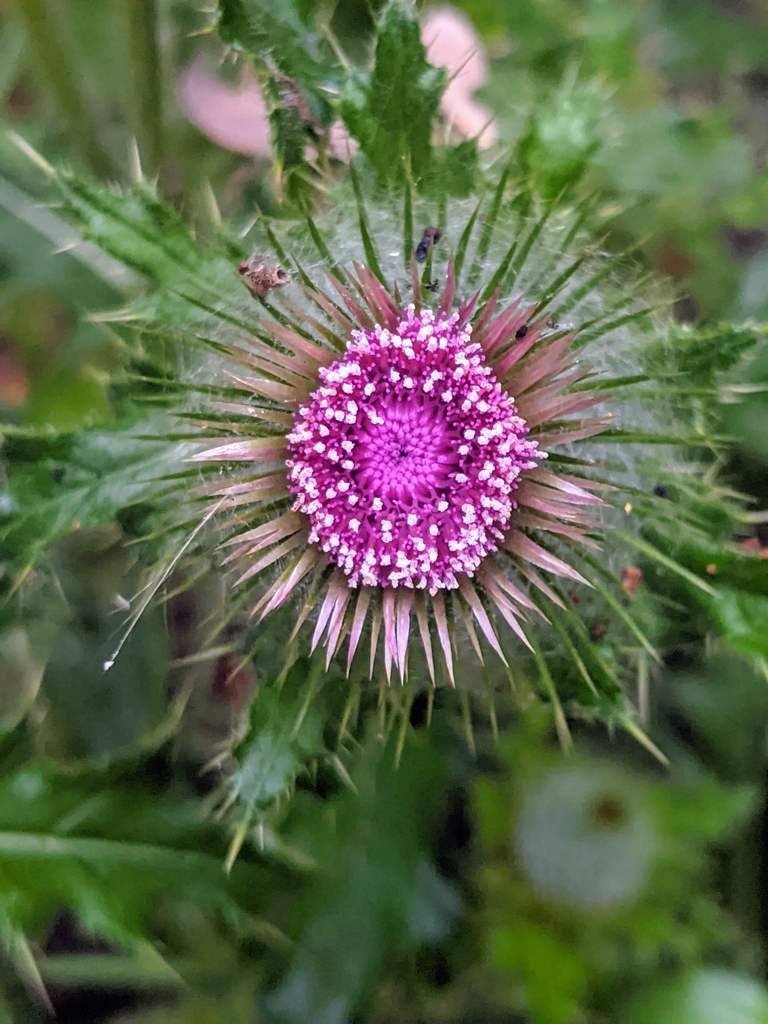
Indian Thistle
Cirsium brevistylum
Care
part shade
7–10ft tall
Friendly
Prized
Young shoots and roots eaten cooked; traditionally harvested as food plant
Coastal bluffs and grassland from Humboldt County to Santa Barbara County, below 2000 ft elevation
Care Guide
Planting
Plant Indian Thistle in a location that receives partial shade and has moist soil - this native thrives in the kinds of wet spots where other plants struggle, from coastal marshes to forest edges. Space plants generously since they can reach 7 to 10 feet tall and may branch substantially; give them room to develop their characteristic single main stem. Plant in fall or early spring to take advantage of seasonal moisture, which matches how this annual or biennial grows in its native Bay Area habitats.
After Planting
Water regularly during the growing season to keep soil consistently moist, mimicking the moist meadows and marshes where Indian Thistle naturally occurs. This plant is either annual or biennial, meaning it will complete its life cycle within one to two years - expect tall, dramatic flowering in year one or two, followed by natural decline. Expect spiny foliage and flowers that attract butterflies and moths, making this an excellent choice for wildlife gardeners willing to tolerate a somewhat aggressive, tall plant.
Wildlife Supported
Insects
Spring and early summer nectar source
Larval feeding on developing thistle tissues in spring
Early spring foraging for colony establishment
Phytophagous feeding on thistle tissues
Larval development in developing seed heads
Herbivory on thistle leaves during growing season