California Buckwheat
Eriogonum fasciculatum
Care
full sun
very low
well-drained, poor soils; extremely drought tolerant
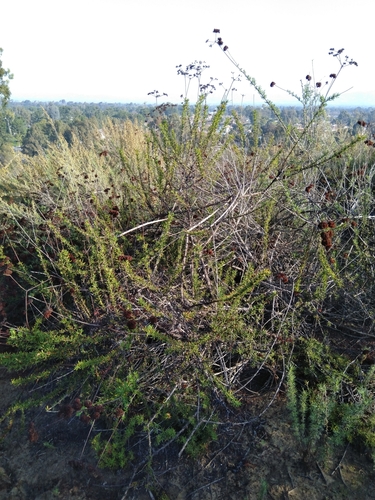
1–3ft tall , 2–4ft wide
May-Oct · white, pink
Evergreen
Resistant
Friendly
Prized
Throughout Southern and Central California
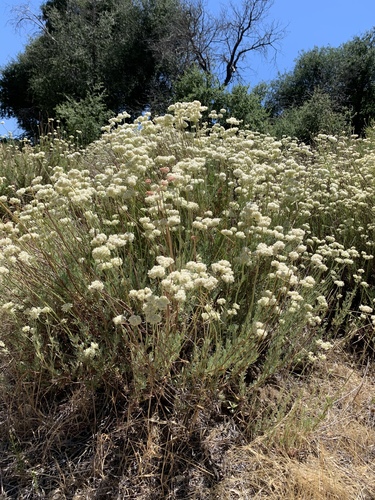
Flat-topped clusters of tiny flowers, white aging to rust-pink
Dried flower heads are ornamental; critical pollinator plant
Care Guide
Planting
Plant California buckwheat in full sun with well-drained soil - it thrives in poor soils and tolerates loamy conditions, but poor drainage is its main enemy. The best time to plant is in fall or winter to establish before summer heat. Space plants according to the variety (they range from 1–3 feet tall), keeping in mind that low-growing forms work well as groundcover while taller varieties can be shaped into hedges. This plant is extremely drought-tolerant and deer-resistant, making it ideal for dry Bay Area gardens.
After Planting
Water weekly during the first summer after planting to establish roots, then transition to occasional summer water (no more than once monthly) by year two. Once established, California buckwheat needs no supplemental water - in fact, overwatering is the #1 mistake people make with this plant. Don't be alarmed when it naturally sheds dried flowers and some leaves as soil dries; this creates its own mulch layer. Expect blooms from May through October, and if you want a tidier appearance, you can prune to shape it, but this low-maintenance plant requires minimal intervention.
Visit Calscape for more information about California Buckwheat
Endangered & Threatened Species Supported
Listed as federally endangered since 1988
Listed under ESA; found only in San Bernardino County, California
Listed as Threatened under California Endangered Species Act
California Species of Special Concern; monarch populations declining
Wildlife Supported
Insects

Host plant for multiple broods Mar-Oct

Specialist host plant for larval development

Primary host plant for larval development

Caterpillar food plant for multiple subspecies

Critical fall migration fuel source Aug-Oct for southbound populations

Host plant for multiple subspecies with extended breeding season

Generalist host plant supporting multiple broods

Opportunistic forager during extended bloom periods
Birds

Seeds consumed during seed maturation period Oct-Dec
Mammals

Seeds consumed as food resource in native chaparral habitat