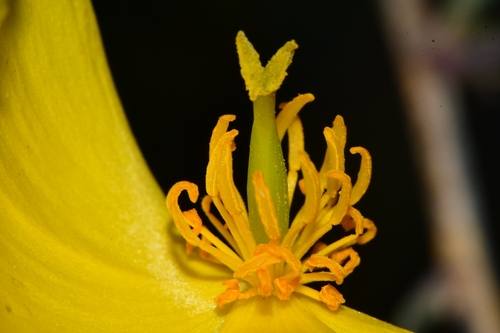
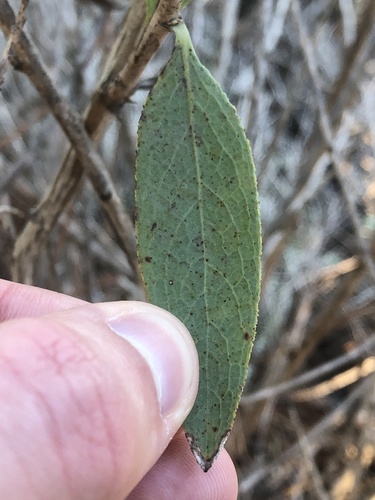
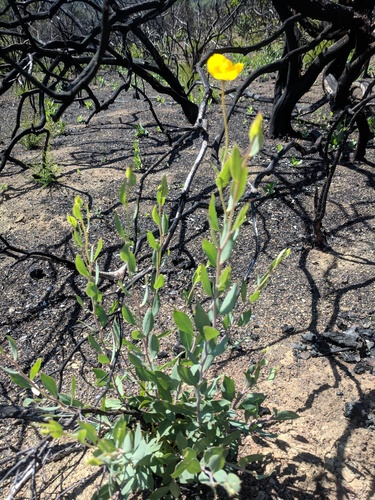
Tree Poppy
Dendromecon rigida
Care
full sun
very low
Fast; Well drained soils, typically on a slope. Tolerant of clay only if given no water after established. Tolerates serpentine soil..
3–10ft tall , 2–8ft wide
Jan-Dec
Evergreen
Resistant
Friendly
Prized
Chaparral endemic to central and southern California, particularly the Coast Ranges and Transverse Ranges from 500-3000 ft elevation.
Care Guide
Planting
Plant your Tree Poppy in full sun in very well-draining soil - this is non-negotiable. If you have clay soil, you can make it work, but only if you commit to zero supplemental water after the plant is established. Plant in fall or winter to take advantage of the rainy season for establishment, and space plants according to their mature size (3–10 feet tall). Avoid planting in shaded or poorly draining spots; this plant wants dry, rocky conditions.
After Planting
Water regularly during your first growing season to help the plant establish, then wean off to nearly nothing once it's settled in (by year 2, you're looking at maximum one irrigation per month in summer, and often zero). This is a fire-following plant that thrives on neglect, so your #1 mistake will be overwatering - resist the urge. Light pruning will keep it rounded and compact; prune after blooming ends (spring). Expect evergreen foliage and yellow flowers from winter into spring, and don't panic if growth slows dramatically once you stop watering - that's the plant working as designed.
Wildlife Supported
Insects

Various lepidopteran larvae utilize Dendromecon as host plant

Female forages on flowers for pollen and nectar

Native bee forages on available flowers
Adults visit flowers for nectar while seeking hosts

Adults visit flowers for pollen in spring months

Adults feed on Dendromecon foliage during spring emergence

Adults visit flowers for nectar in spring-early summer

Adults feed on nectar and pollen when available
+2 more species