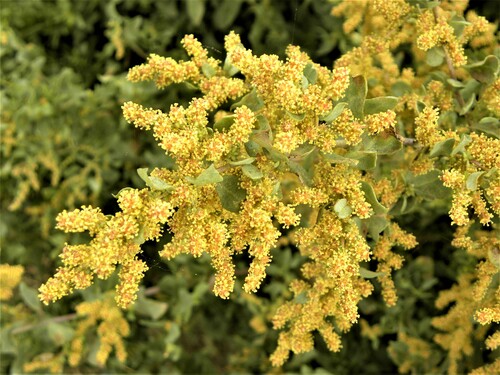
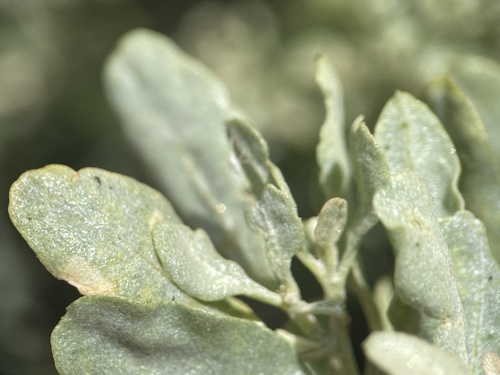
Big Saltbush
Atriplex lentiformis
Care
full sun
low
Medium; Tolerates a variety of soils, especially alkaline. Tolerates saline soil.,Tolerates sodic soil..
3–10ft tall , 10–10ft wide
Jun-Aug
Evergreen
Friendly
Seeds eaten; leaves eaten fresh or cooked as greens
Desert scrub and alkali flats of the Mojave Desert, Colorado Desert, and Great Basin from sea level to 3000 ft elevation, extending to Arizona and Nevada.
Care Guide
Planting
Plant your Big Saltbush in full sun and well-drained soil - it's extremely tolerant and thrives in alkaline, saline, and sodic soils that would challenge other plants. Space it generously since it grows fast and spreads as wide as it gets tall (3 to 9 feet), making it better suited to larger gardens or slopes rather than tight residential spaces. Plant in fall or early spring to give it time to establish before the heat.
After Planting
Water weekly through your first summer, then cut back to a maximum of twice monthly once established - this is a genuinely low-water shrub once it roots in. The biggest mistake is overwatering: Big Saltbush evolved for tough conditions and doesn't need coddling. Prune as needed to maintain your desired size and shape, but this fast grower does most of the work for you. By year two, you'll have a dense, wildlife-magnet shrub that barely needs your attention.
Endangered & Threatened Species Supported
Western Pygmy Blue butterfly; California species of special concern
California Species of Special Concern
Wildlife Supported
Insects

Specialized larval host in desert and semi-arid regions

Primary larval host plant for this saltbush-dependent skipper

Specialized gall-forming midge dependent on this saltbush species

Larval host plant for this small desert butterfly species

Forages on flowers for pollen and nectar when available

Small native bee utilizing pollen throughout active seasons

Predatory beetle foraging on aphids and insects in shrub canopy

Native bee pollinator utilizing available floral resources
Birds

Breeds in desert scrub; builds cup nests in shrub canopy

Dense foliage provides shelter and nesting habitat in arid regions

Builds distinctive hanging nests in shrub branches for breeding

Migration staging habitat and foraging during fall passage
Mammals

Seeds cached and consumed; important food source in arid habitat