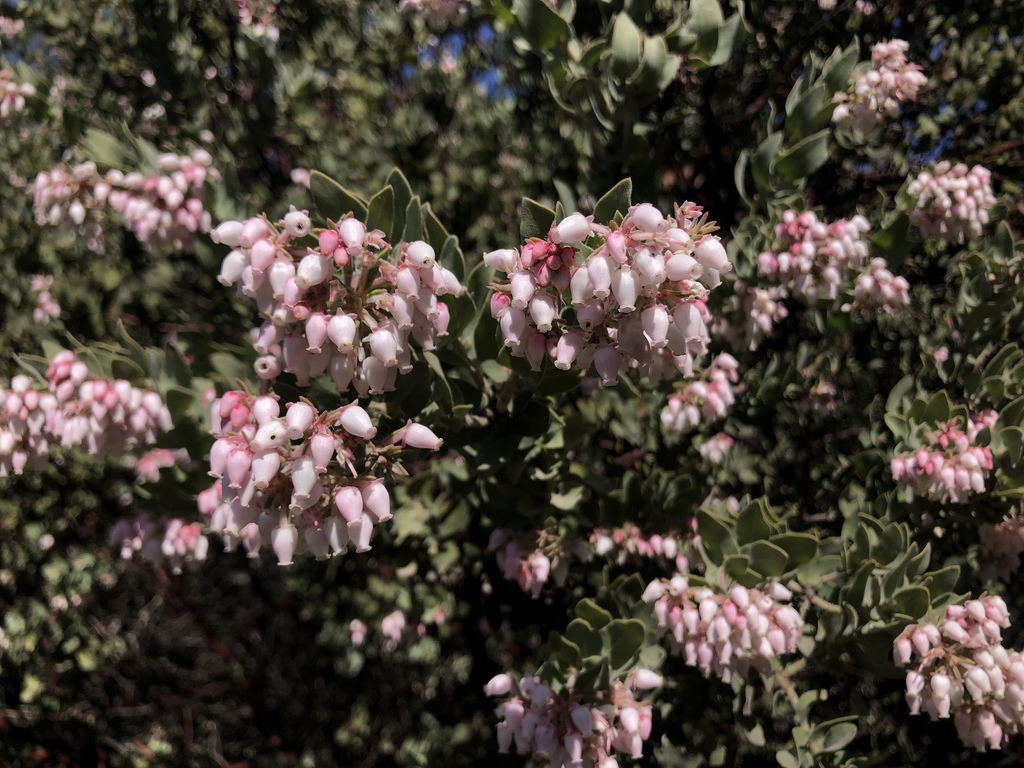
Mount Diablo Manzanita
Arctostaphylos auriculata
Care
full sun
3–15ft tall
Jan-Dec
Evergreen
Resistant
Friendly
Berries made into cider drink, traditional Indigenous use
Supports up to 68 butterfly and moth species in Mediterranean California
Chaparral endemic to Mount Diablo in Contra Costa County and surrounding foothills from 1000-3000 ft elevation.
Care Guide
Planting
Plant your Mount Diablo Manzanita in full sun - this is non-negotiable. The Calscape data doesn't specify soil type or drainage requirements, so consult your nursery about whether your site has the serpentine or well-draining conditions this endangered species prefers. Space according to its mature size of 3–15 feet tall, and plant in fall or early winter to take advantage of the rainy season for establishment.
After Planting
Water regularly through your first summer to help the plant establish, then reduce watering as it matures - manzanitas are drought-tolerant once established. Resist the urge to over-water or fertilize; these plants evolved in specific soil conditions and don't need coddling. Prune lightly after flowering (spring) if needed to shape, but this compact shrub naturally grows dense and won't require heavy pruning. Your biggest mistake will be watering too much in year two and beyond.
Visit Calscape for more information about Mount Diablo Manzanita
Wildlife Supported
Birds
Year-round resident in California; primary nectar source during winter and early spring when few other plants bloom
Fall migration and wintering populations exploit berry resources
Fall and winter seed consumption from ripened fruit
Insects
Early spring foraging when colony establishing; important early pollen source
Adult nectar foraging during spring activity period
Early spring pollen and nectar forage for hive food stores
Adult foraging on spring blooms; beneficial predatory larvae stage
Early spring native bee foraging for larval provisions
Spring migration nectar source for population movements through California
Spring adult emergence and feeding on early season blooms
Adult feeding on early blooms; larvae predatory on aphids in surrounding vegetation