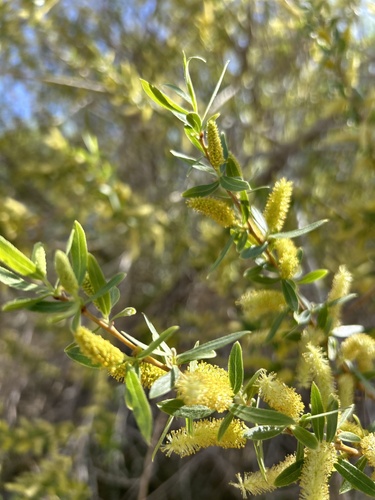
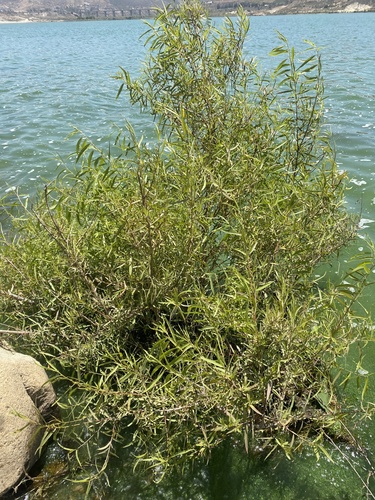
Goodding's Willow
Salix gooddingii
Care
full sun
high
Slow, Standing; Tolerates a variety of soils as long as adequate moisture is present. Tolerates sodic soil..
15–40ft tall , 25–25ft wide
Jan-Dec
Deciduous
Supports up to 328 butterfly and moth species in Mediterranean California
Riparian woodlands and floodplains of California deserts and interior regions, particularly in the Colorado and Mojave deserts and southern California riparian zones from sea level to 4000 ft.
Care Guide
Planting
Plant Goodding's Willow in full sun in a location where it can access consistent moisture - ideally near water features, in bioswales, or in areas with slow drainage and potentially wet soil. This tree tolerates a variety of soil types as long as adequate moisture is present, including alkaline and saline soils. Plant in early spring to give the tree the full growing season to establish before winter dormancy. Space it with room to grow, as mature trees reach 15–40 feet tall.
After Planting
Keep the soil moist through the first summer and beyond; this is a water-loving tree that needs consistent moisture to thrive and should never fully dry out. This is not a drought-tolerant plant, so year-round watering is essential - don't expect to wean off irrigation the way you might with other natives. The tree is deciduous and will drop its leaves in fall and winter, which is normal. The biggest mistake Bay Area gardeners make is planting this in typical dry garden conditions; it will struggle and may die if left to rely on rainfall alone, especially in our dry summers.
Wildlife Supported
Birds

Primary cavity nester in Goodding's willow; uses dead wood for excavation
Insects

Cavity nester; relies on Goodding's willow branches for nesting tunnels

Early season pollen source for nest provisions

Xylem feeder on branches and twigs during monsoon season

Forages on foliage and tends aphids

Aggregates in willow stands during autumn dispersal
Larvae bore in wood; particularly affects stressed trees

Phloem feeder on new growth; supports predatory insect populations

Parasitic plant; provides fruit for bird dispersers and structural complexity
+4 more species