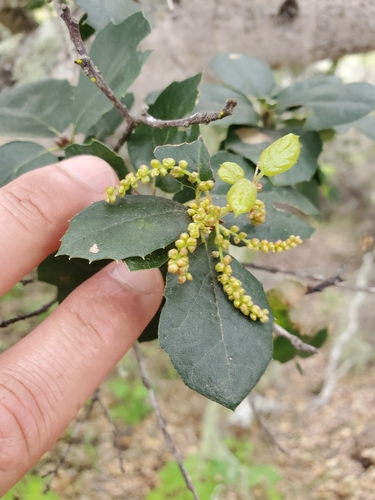
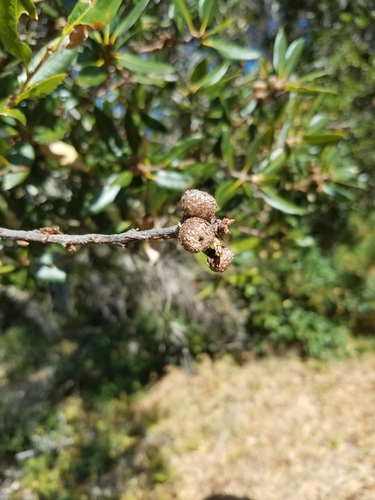
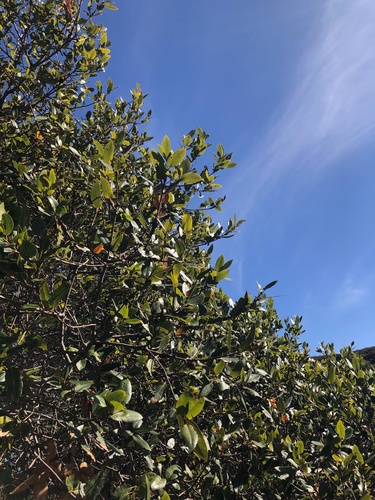
Santa Cruz Island Oak
Quercus parvula var. shrevei
Care
full sun, part shade
low
3–56ft tall
Mar-May
Evergreen
Acorns leached and ground into flour for traditional food
Supports up to 275 butterfly and moth species in Mediterranean California
Oak and pine woodland endemic to Santa Cruz Island, in the Channel Islands off the coast of Santa Barbara County.
Care Guide
Planting
Plant your Santa Cruz Island Oak in full sun to part shade, ideally in fall or winter when the plant can establish roots before summer heat. This evergreen oak is native to coastal slopes and tolerates low water once established, so choose a spot with good drainage and space it appropriately for its mature size (potentially 3-56 feet depending on variety and conditions). Avoid planting in areas that will receive supplemental summer irrigation meant for other plants, as this oak naturally expects dry summers.
After Planting
Water weekly during your first summer to establish a deep root system, then gradually reduce frequency as fall arrives - by year two, this low-water oak should need little to no supplemental water except during drought. Prune lightly in late winter or spring if needed to shape the plant or remove dead wood, but avoid heavy pruning. The biggest mistake Bay Area gardeners make is overwatering established plants; once your oak is past that first summer, let it go dry between rains and resist the urge to water it along with your lawn.
Visit Calscape for more information about Santa Cruz Island Oak
Wildlife Supported
Insects

causes leaf necrosis and stem cankers; primary disease threat to oaks in coastal California

sap-feeding whitefly; populations peak in late summer and fall
Mammals

acorn production critical September-November for native mammal food caching and winter survival

acorn caching and consumption critical for overwinter survival

acorn cache harvesting and consumption August-February