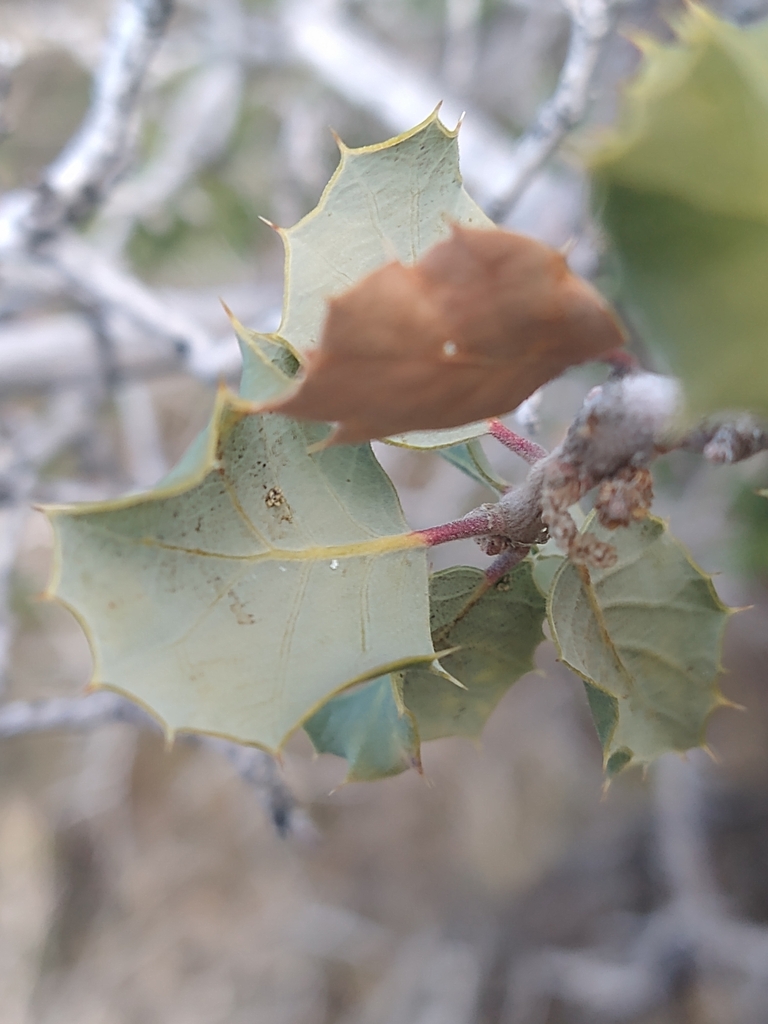
Dunn Oak
Quercus palmeri
Care
full sun
10–20ft tall
Acorns leached and ground into flour for traditional food
Supports up to 275 butterfly and moth species in Mediterranean California
Chaparral and oak woodlands endemic to the southern Transverse and Peninsular Ranges, particularly in San Diego and Orange counties from 1500-4000 ft elevation.
Care Guide
Planting
Plant your Dunn Oak in full sun - this is non-negotiable for healthy growth. While specific soil requirements aren't documented, this species thrives in the dry habitats of the Southwest, so choose a spot with excellent drainage and avoid heavy clay or consistently moist soils. Space it to accommodate its mature size of 10–20 feet tall, as it can eventually reach that spread. Plant in fall or early winter to give roots time to establish before the heat of summer.
After Planting
Water regularly during your plant's first growing season to help it establish, then gradually reduce frequency as it matures - Dunn Oak is adapted to dry conditions and becomes drought-tolerant once established. Expect slow to moderate growth in year one as the plant focuses on root development rather than visible size. Prune only to remove dead or damaged branches; this oak naturally develops an angular, multi-stemmed form. The biggest mistake Bay Area gardeners make is overwatering out of anxiety - your Dunn Oak actually prefers lean, dry conditions, so err on the side of underwatering rather than keeping the soil consistently moist.
Endangered & Threatened Species Supported
Palmer's Mariposa Lily - Threatened by habitat loss
Wildlife Supported
Birds
Stores acorns in granaries; depends on oak mast for year-round food
Acorn caching and consumption; important oak seed disperser
Insects
Gall-forming wasps; larvae develop within plant tissues
Larvae develop within acorns; critical seed predator
Feeds on leaf sap; active during warm months
Mammals
Acorn collection and caching critical for winter survival; dispersal agent