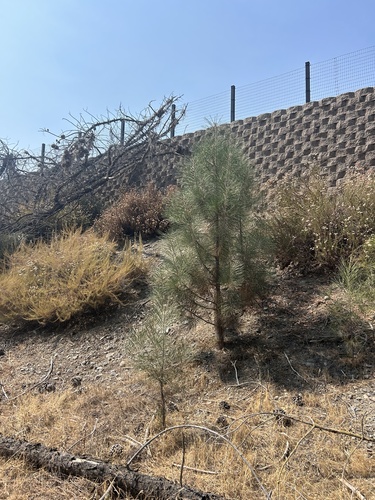
Gray Pine
Pinus sabiniana
Care
full sun, part shade
very low
Fast, Medium; Poor soils, serpentine soils. Tolerates serpentine soil..
20–80ft tall , 20–40ft wide
Jan-Dec
Evergreen
Resistant
Seeds eaten raw or roasted
Supports up to 220 butterfly and moth species in Mediterranean California
Oak woodlands and foothills throughout central and northern California, Sierra Nevada foothills, and Coast Ranges from sea level to 3000 ft elevation.
Care Guide
Planting
Plant your Gray Pine in full sun with fast-draining or medium soil - it thrives in poor soils where other plants struggle, so don't amend heavily. Space it with room to grow; it can reach 40–60 feet with regular irrigation or up to 80 feet without. The feathery canopy creates dappled shade perfect for understory plants beneath it. Plant in fall or early spring when the tree can establish roots before summer heat.
After Planting
Water weekly during your first summer, then taper to once monthly once established - this is a drought-tough native that actually prefers dry conditions. After year one, you can often stop supplemental watering except during extreme heat. Prune minimally; let it grow naturally into its upright form. The biggest mistake is overwatering: Gray Pine rots in wet soil, so err on the dry side and trust its resilience.
Endangered & Threatened Species Supported
Delisted from federal ESA in 2007; remains state-listed in California
Western gray squirrel listed as Threatened under CESA; Species of Special Concern
Wildlife Supported
Mammals

Primary seed dispersal agent; caches pine nuts for overwinter food storage Sep-Nov
Birds

Uses large branches for nesting and roosting; critical nest tree in suitable habitat

Harvests and caches seeds; important secondary disperser Oct-Dec
Insects
Larvae develop within pine cones; species-specific host relationship Apr-Jun

Larvae feed on developing cone tissues and seeds; species endemic to P. sabiniana

Wood-boring larva in stressed or diseased trees Jun-Sep

Wood-boring larvae in weakened or dying trees Jul-Sep

Cone and seed feeder; larval development Apr-Jul

Larval development in cones and seeds May-Jul

Parasitic plant; causes crown damage and limb deformity; reduces seed production
Arachnids

Canker-forming rust; causes branch dieback and trunk damage