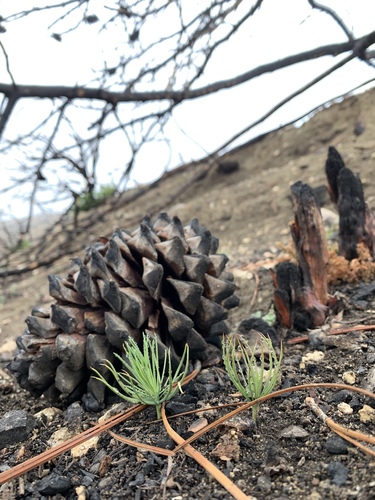
Bigcone Pine
Pinus coulteri
Care
full sun, part shade
low
Fast, Medium; Dry rocky soils.
20–138ft tall
Mar-May
Seeds eaten raw or roasted
Supports up to 220 butterfly and moth species in Mediterranean California
Chaparral and pine woodlands of the southern Sierra Nevada, Transverse Ranges, and Peninsular Ranges from 2000-6000 ft elevation, south to Baja California.
Care Guide
Planting
Plant your Bigcone Pine in full sun with fast to medium draining soil - it thrives in dry, rocky conditions and won't tolerate wet feet. Space it generously: this tree grows 30-80 feet tall with horizontal branches, so give it room away from structures and power lines. Plant in fall or early spring to let the root system establish before summer heat. Avoid areas where falling cones could be a hazard; those hefty 4-10 pound cones earn the local nickname 'widowmakers' for a reason.
After Planting
Water moderately during your tree's first growing season to establish roots, then taper off as it matures - Bigcone Pines are adapted to low-water conditions and become drought-tolerant once established. Prune minimally; the Calscape data doesn't specify pruning needs, but the tree naturally grows with a vertical trunk and horizontal to upward-curving branches. The biggest mistake Bay Area gardeners make is overwatering: this pine evolved for the dry rocky soils of coastal southern California mountains, so resist the urge to coddle it. Once established in year two, your tree will need little supplemental water outside of extreme droughts.
Endangered & Threatened Species Supported
California Species of Special Concern
Wildlife Supported
Insects

Larvae feed on pine needles spring-early summer; adults emerge mid-summer

Attracted to fire-damaged trees; larvae develop in wood

Larvae tunnel in wood of stressed/dead trees

Larvae bore in cambium and inner bark; overwinter as pupae

Larvae mine needles throughout year; multiple generations possible

Parasitic plant; reduces tree vigor and seed production
Mammals

Harvest large Coulter pine cones; important seed predator and occasional disperser

Cache large cones for winter food; major seed disperser

Cache and consume large pine seeds; important for regeneration in some areas
Birds

Specialized seed extraction from large cones; irruptive visitor in cone crop years