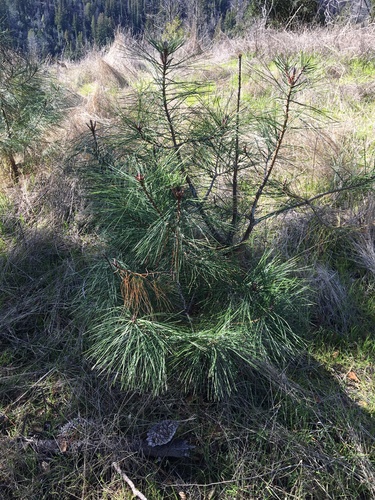
Knobcone Pine
Pinus attenuata
Care
full sun, part shade
very low
Fast; Prefers gravelly, sandy soil.
26–118ft tall
Evergreen
Resistant
Seeds eaten raw or roasted
Supports up to 220 butterfly and moth species in Mediterranean California
Chaparral, pine woodlands, and mixed conifer forests of the Sierra Nevada and Coast Ranges from 2000-6000 ft elevation, scattered throughout interior ranges.
Care Guide
Planting
Plant your Knobcone Pine in full sun with fast-draining, gravelly or sandy soil - this tree thrives on poor soils where other plants struggle, so don't amend your soil with compost or fertilizer. Space it according to your desired mature height (26–118 feet depending on growing conditions), and ensure the planting site has excellent drainage since it's adapted to dry rocky mountain soils. Plant in fall or early winter to establish roots before the growing season.
After Planting
Water deeply but infrequently during your first summer to establish a strong root system, then transition to very low water - this is a drought-tolerant tree that actually prefers dry conditions once established. The biggest mistake Bay Area gardeners make is overwatering; treat this like a native oak and let it go dry between waterings. Expect minimal pruning needs; the tree naturally develops a conical crown with a straight trunk. Prune only to remove dead or crossing branches, and avoid heavy fertilizing or soil amendments that would contradict its preference for lean, gravelly sites.
Wildlife Supported
Birds
Extract wood-boring larvae and bark beetles; California species include Hairy and Downy Woodpeckers

Forages on bark beetles and wood-boring insects in Pinus attenuata; occasional nesting
Insects

Multiple generations per year; larvae feed on new growth and developing cones

Larvae feed on developing cones and seeds; critical reproductive impact

Parasitic plant hosted by Pinus attenuata; creates witches' broom habitat structure

Wood-boring larvae develop in bark and wood; attracted to stressed/fire-affected trees

Metallic wood-boring beetle; larvae tunnel under bark of stressed trees

Wood-boring beetle larvae exploit dead and dying wood

Larvae mine within pine needles; California-specific species

Sedentary scale insect feeding on needle phloem; overwinters on foliage
Mammals

Harvest and cache seeds from cones; significant seed predator reducing reproductive success

Cache pine seeds; cones of Pinus attenuata are serotinous but provide seasonal seed resource