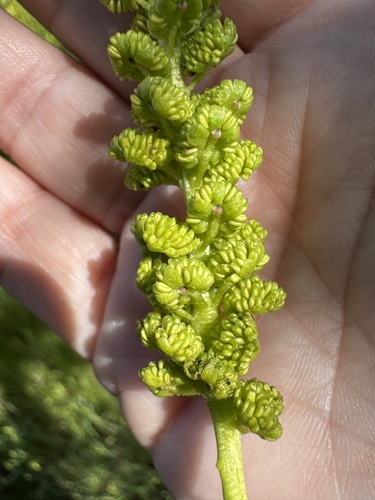
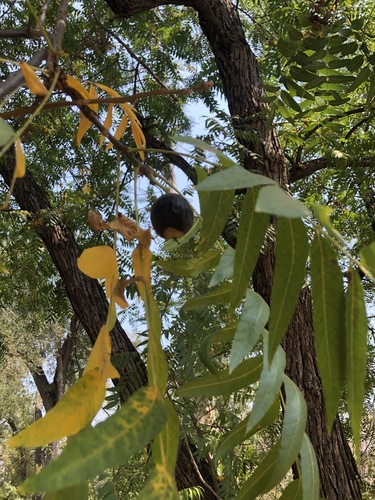
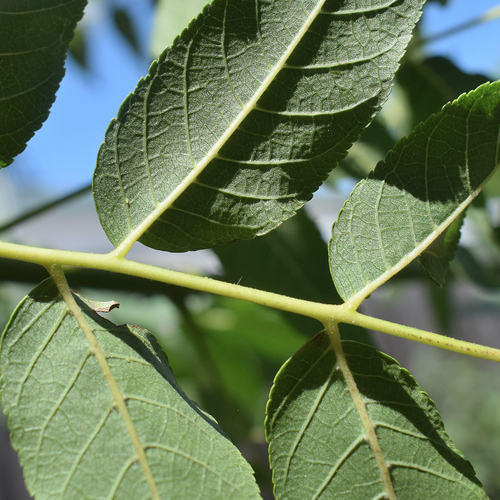
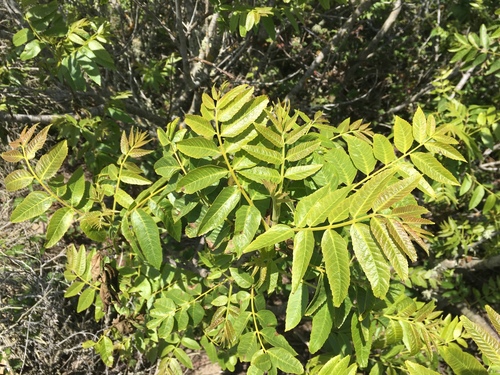
Hind's Black Walnut
Juglans hindsii
Care
full sun
low
Fast, Medium, Slow; Tolerates sand and clay soils.
60–60ft tall
Mar-May
Nuts cracked and eaten; traditional Indigenous food
Riparian valleys and oak woodlands of the Sacramento Valley and surrounding foothills, now largely extirpated but historically found in scattered locations below 1000 ft.
Care Guide
Planting
Plant your Hind's Black Walnut in full sun where it has room to grow - this tree reaches 30 to 60 feet tall with a broad crown, so give it space away from structures and other plants. It's tolerant of sand and clay soils and handles fast, medium, or slow drainage, making it adaptable to most Bay Area yards. Plant in fall or early spring to establish before the heat of summer. The tree's deep taproot means it prefers not to be moved once established, so choose your location carefully.
After Planting
Water weekly during the first summer to help it establish, then taper off as the tree matures - mature Hind's Black Walnuts need only low to moderate water once rooted in. Expect leaves to emerge late in spring and provide dense shade by summer; the tree is deciduous and will drop all its leaves in fall. Little pruning is needed as this tree naturally grows with a single, straight trunk. Your biggest mistake will be overwatering; let the soil dry between waterings rather than keeping it constantly moist, especially in clay soils.
Visit Calscape for more information about Hind's Black Walnut
Endangered & Threatened Species Supported
Western gray squirrel listed as Threatened under CESA; Species of Special Concern
Wildlife Supported
Mammals

Primary mast crop harvested Sept-Nov, critical cache food for winter survival

Mast consumption and seed dispersal Sept-Nov
Insects

Beetle galleries in twigs and branches; vector for thousand cankers disease fungus

Parasitic plant host; provides fruit for songbirds in winter

Early spring pollen source during catkin emergence

Larval feeding on foliage during growing season

Larval leaf mining during new foliage development