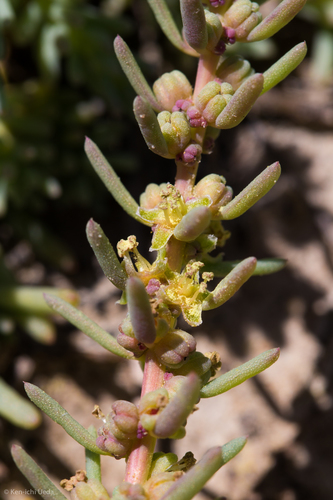
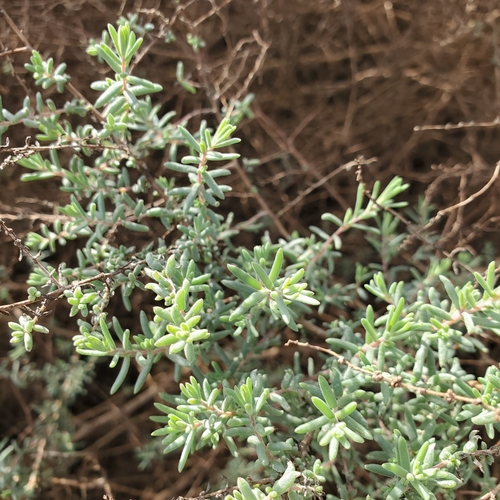
Bush Seepweed
Suaeda nigra
Care
full sun
moderate
Fast; Usually found in rocky, sandy or gravelly soil with subterranean water. Tolerates saline soil.,Tolerates sodic soil..
3–5ft tall , 3–3ft wide
Mar-May
Evergreen
Friendly
Young leaves and stems eaten raw or cooked as potherb; traditional Native food
Salt marshes and alkali flats throughout coastal California and the Central Valley, below 500 ft elevation.
Care Guide
Planting
Plant Bush Seepweed in full sun where it can drain fast - this plant thrives in rocky, sandy, or gravelly soil and actually tolerates saline and alkaline conditions that would kill most plants. Spring is your best window for planting. Space it with room to spread, as this shrub can reach 3–5 feet tall with many spreading branches.
After Planting
Water moderately through your first summer, keeping the soil moist as it establishes, then gradually reduce watering as the plant matures and taps into deeper moisture. This is a moderate-care plant that's fairly forgiving once established; your main mistake would be overwatering or planting it in poorly draining soil, which invites root rot. Expect flowers in spring, and prune only if needed to manage its shape - the plant itself requires little fussing.
Endangered & Threatened Species Supported
Western Pygmy Blue butterfly; California species of special concern
Wildlife Supported
Insects
Specialist feeder on Suaeda; larvae consume foliage and developing plant tissue

Multiple generations; larvae feed on halophytic plants including Suaeda species in alkaline habitats

Polyphagous larval host plant; supports multiple broods in California's warmer regions

Piercing-sucking herbivore; feeds on plant sap and developing seeds; year-round in mild California climates

Polyphagous chenopod feeder; larvae web foliage; populations peak late summer

Specialized aphid on Suaeda species; can form dense colonies on stems and leaves

Sap-feeding specialist on Suaeda; may induce gall-like responses on host plant