← Back to results

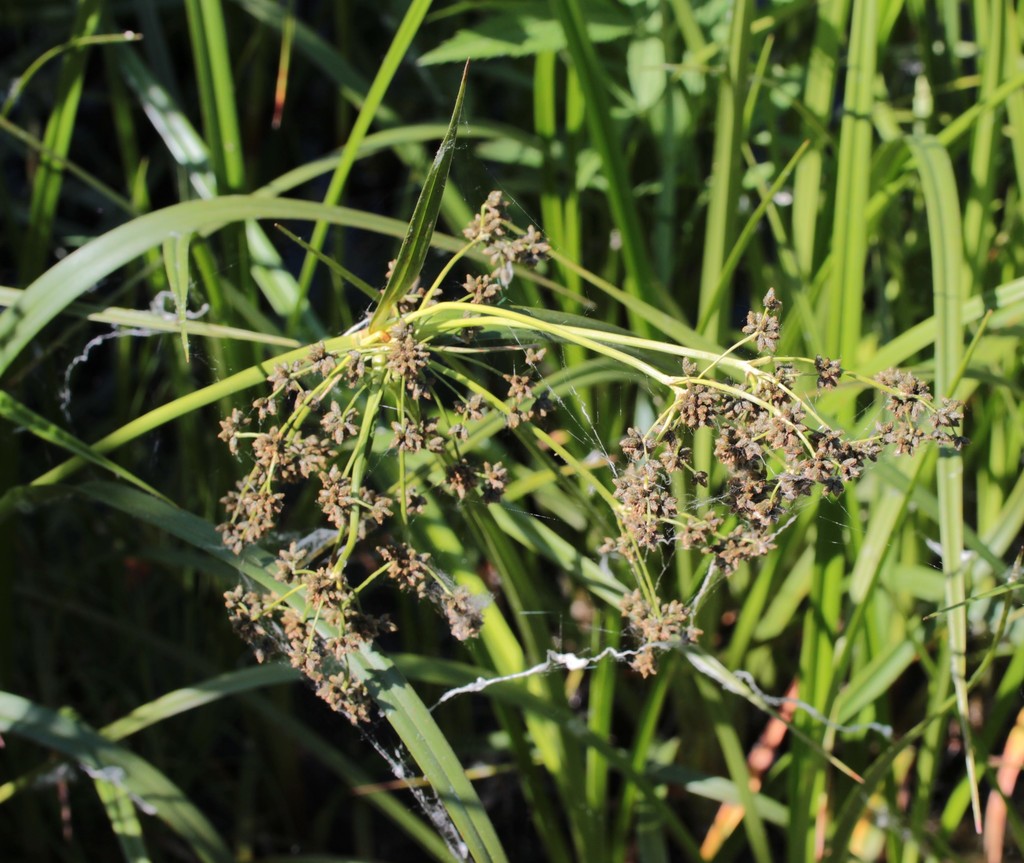
Small-fruited bulrush

Scirpus microcarpus

perennial herb View on Calscape

Care

Sun

part shade

Water

moderate

Soil

Standing; Adaptable, tolerant of sand, loam and clay.

Size

3–6ft tall

Bloom

Mar-May

Foliage

Deciduous

Container

Friendly

Edible

Tubers boiled or roasted; traditional Indigenous food

Native Range

Freshwater marshes and riparian areas throughout California from the north coast to San Diego County, below 3000 ft elevation, extending northward to British Columbia.

Care Guide

Planting

Plant your small-fruited bulrush in part shade in a location where it can stay consistently wet or even sit in standing water - this is a marsh plant, so wet is what it wants. It's adaptable to sand, loam, or clay soils, so drainage isn't a concern the way it is with other plants; in fact, poor drainage is ideal. Space it with room to reach its full 5–6 feet tall and equally wide at maturity. Spring is the best time to plant, giving it the growing season ahead.

After Planting

Water deeply and consistently through your first summer and into fall; this plant thrives in wet habitats and shouldn't dry out. Once established (by year two), it will handle the Bay Area's dry summers better than you'd expect, though it will perform best if you can keep it moist. In late fall or early winter, the foliage will die back - this is normal for a deciduous plant. The biggest mistake people make is trying to dry it out; resist the urge to let it go dry, especially in its first year.

Visit Calscape for more information about Small-fruited bulrush

Endangered & Threatened Species Supported

Virginia Rail Rallus limicola
CA: Threatened, CA Special Concern

California Threatened species

Mississippi kite Ictinia mississippiensis
CA Special Concern

California Species of Special Concern

Wildlife Supported

Birds

Seeds · Year-Round

resident and migratory populations harvesting seeds and shoots in freshwater wetlands

hig Mallard
Seeds · Year-Round

dabbling duck foraging on ripened seeds in marshes during migration and winter

Shelter · Year-Round

breeding season nesting and foraging cover in bulrush marshes

Nesting · Year-Round

occasional nest placement in dense bulrush stands in California valleys

Insects

Larval Host · Year-Round

larvae feeding on leaves and culms during growing season

Mammals

Shelter · Year-Round

denning habitat among dense bulrush stands near water margins

Foliage · Year-Round

supplemental forage when primary willow unavailable; dam and lodge construction

Where to Buy

Native Here Nursery

101 Golf Course Dr, Tilden Regional Park, Berkeley

Sat 10am-2pm

3.0 mi (510) 549-0211 Website
Watershed Nursery

601A Canal Blvd, Richmond

Tue-Sun 10am-4pm

5.0 mi (510) 234-2222 Website