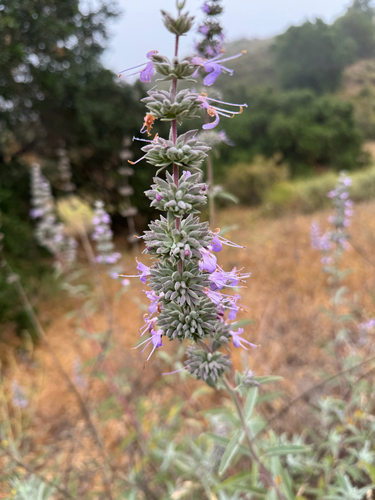
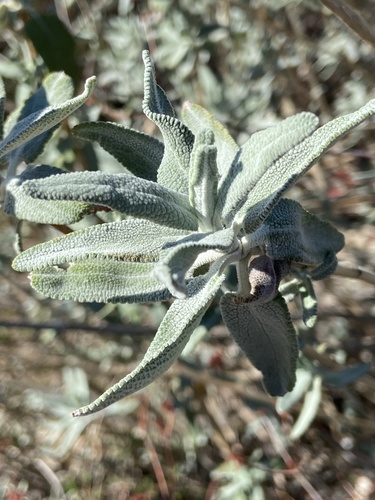
Purple sage
Salvia leucophylla
Care
full sun
very low
Fast, Medium; Variable.
2–5ft tall , 3–10ft wide
Mar-Aug
Deciduous
Resistant
Friendly
Yes
Prized
Chaparral and coastal sage scrub of southern California from Santa Barbara County to San Diego County and the southern Sierra Nevada, below 3000 ft elevation.
Care Guide
Planting
Plant purple sage in full sun with fast-draining or medium-draining soil - it's tough about soil type but won't tolerate wet feet. Space according to your desired form: plant closer together if you want a dense groundcover (it spreads to 10 feet wide), or give single plants room to mound up to 5 feet tall. Spring is ideal for planting in the Bay Area to let it establish before summer heat.
After Planting
Water twice per month during your first summer to help it establish, then you can back off dramatically - this plant is extremely drought-tolerant and thrives on very little water once established. Prune to shape as needed; it's a fast grower so you have flexibility. The biggest mistake people make is overwatering, which this native shrub absolutely doesn't need and will resent.
Endangered & Threatened Species Supported
California Species of Special Concern; monarch populations declining
Wildlife Supported
Insects

Critical migration nectar source Aug-Oct and Mar-Apr

Multiple generations on various hosts including salvias

Multiple generations Mar-Nov

Colony season Mar-Oct, foraging throughout active period

Opportunistic bloomer following wet winters, peak foraging Apr-Jun

Multi-brooded Mar-Nov

Forms characteristic galls on Salvia foliage, host-specific
Birds

Migration staging fuel Feb-May and Jul-Sep

Year-round resident, critical winter nectar source Dec-Feb

Primary nectar source during breeding season Mar-Jul

Seeds harvested Jul-Feb, particularly important late summer-fall