Fragrant sumac
Rhus aromatica
Care
full sun
low
Fast; Prefers sandy soil.
2–8ft tall , 8–8ft wide
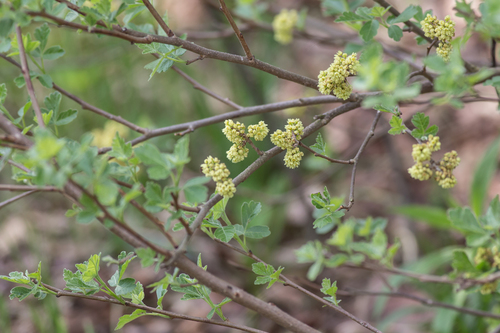
Mar-May
Deciduous
Friendly
Yes
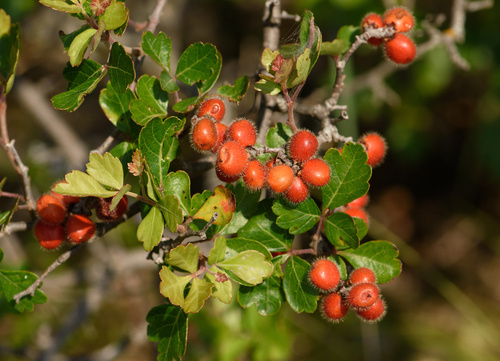
Berries dried and ground into spice; used for flavoring by Indigenous peoples
Eastern slopes of the Sierra Nevada and desert ranges from Lassen County to Kern County, 2000-6000 ft elevation, extending to Oregon, Nevada, Utah, and Arizona.
Care Guide
Planting
Plant fragrant sumac in full sun with fast-draining, sandy soil - this is non-negotiable for success in the Bay Area. Dig a hole with good drainage and space plants according to your desired mature size (2 to 8 feet tall depending on variety). Plant in fall or winter when the plant is dormant to give it time to establish roots before summer heat.
After Planting
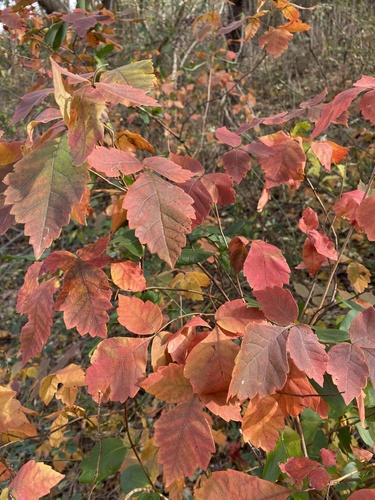
Water weekly during your first summer, then back off to once weekly or less once established. The plant is deciduous, so don't panic when it drops its leaves in fall - this is normal and you'll get attractive fall color before dormancy. The #1 mistake is overwatering: this is a drought-tolerant native that actually prefers dry conditions, so err on the side of less water rather than more, especially after year one.
Wildlife Supported
Birds

Critical fall migration fuel source, September-October staging

Fall and winter fruit consumption supports migration and overwintering

Fall migration and winter survival food source

Critical migration stopover resource, August-September

Fall and winter fruit resource

Fall and winter fruit and foliage consumption

Fall foraging for berries and seeds
Insects

Primary larval host plant, caterpillars feed on foliage April-June

Caterpillar host plant, spring brood April-May

Spring pollinator visiting flowers

Nectar foraging during bloom

Floral visitor for nectar and pollen collection

Caterpillar host plant, larvae feed on foliage
Mammals

Bark and stem browsing and feeding

Browsing shrub leaves and stems, especially in winter