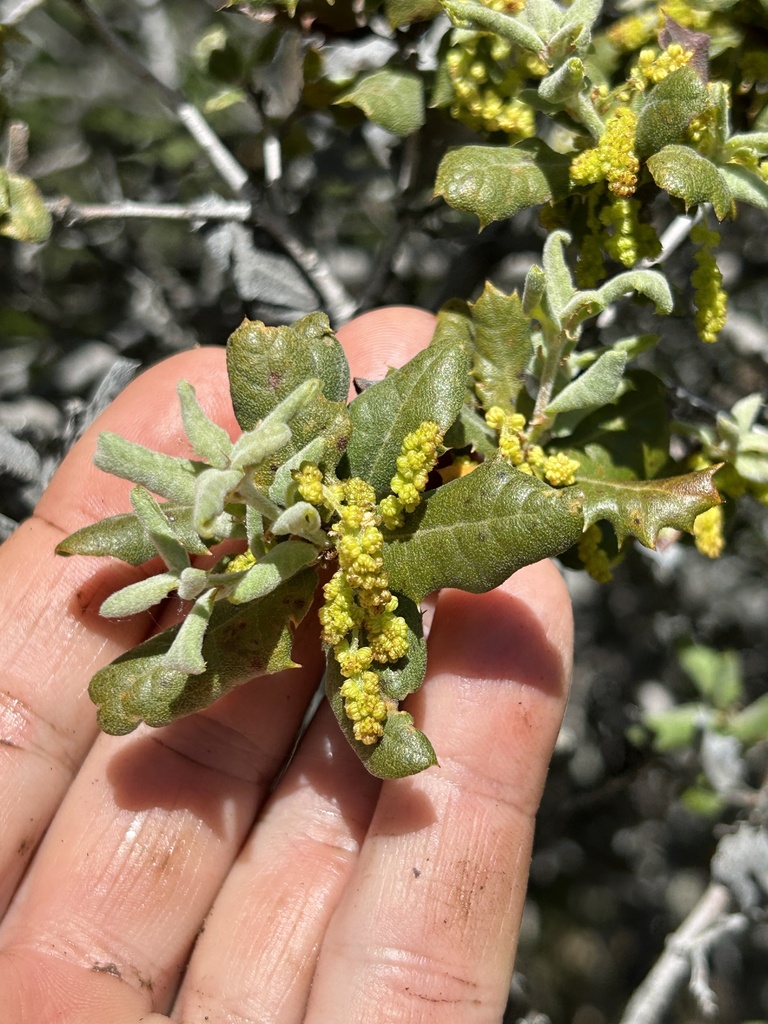
Leather Oak
Quercus durata
Care
full sun
very low
Medium; Although often found in serpentine soil, it is tolerant of other soils as long as nutrient level is low and drainage is adequate. Tolerates serpentine soil..
3–12ft tall , 3–12ft wide
Mar-May
Evergreen
Resistant
Acorns leached and ground into flour for traditional Indigenous food
Supports up to 275 butterfly and moth species in Mediterranean California
Chaparral and oak scrub of the inner Coast Ranges and Sierra Nevada foothills from Mendocino County to Kern County, 1000-3500 ft elevation.
Care Guide
Planting
Plant your leather oak in full sun with well-draining soil - it thrives in dry, rocky, nutrient-poor conditions and tolerates a range of soils including clay, so you don't need to amend heavily. Space it according to your final desired size (3–12 feet tall depending on variety and conditions), and plant in fall or winter when the plant is dormant to give it time to establish before summer heat. Drainage is critical; if your soil tends to stay wet, consider planting on a slope or in a raised area rather than amending with compost, which this oak doesn't prefer.
After Planting
Water twice monthly maximum during your first summer after planting, then wean off irrigation entirely once established - this is a drought-adapted plant that needs little water to thrive. The biggest mistake is overwatering or planting in rich soil; leather oak actually prefers lean conditions and will struggle in overly fertile gardens. Year one is about getting roots established; after that, ignore it during dry months and let it do what it evolved to do. This is an evergreen oak that blooms spring (March–May), so you'll see flowers early in the season.
Wildlife Supported
Birds
Acorns consumed by native California birds and mammals; winter food source
Insects
Primary oak host for gall-forming insects and leaf miners
Parasitic plant hosted on Leather Oak branches; provides winter food for birds
Caterpillars feed on oak foliage during growing season
Larval host plant for this endemic California butterfly subspecies
Collects pollen and nectar from flowering oak catkins
Tends honeydew-producing insects on oak foliage and stems
Larvae defoliate oak in early spring before pupation
Adult beetles feed on oak foliage; larvae bore in wood and bark
+2 more species