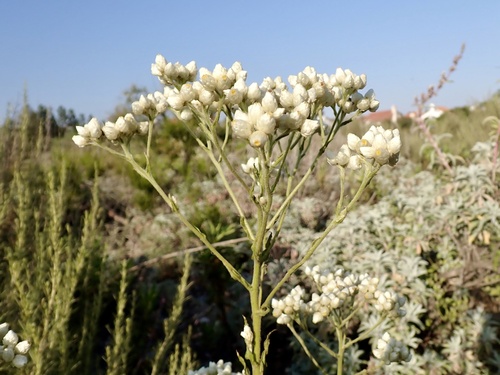
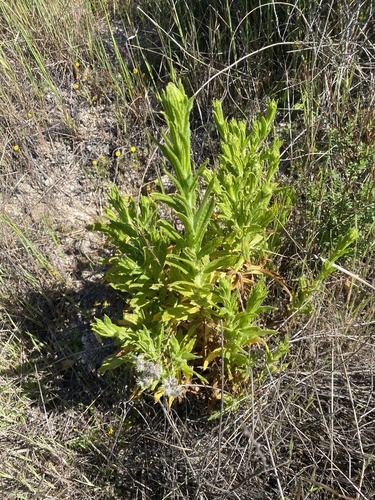
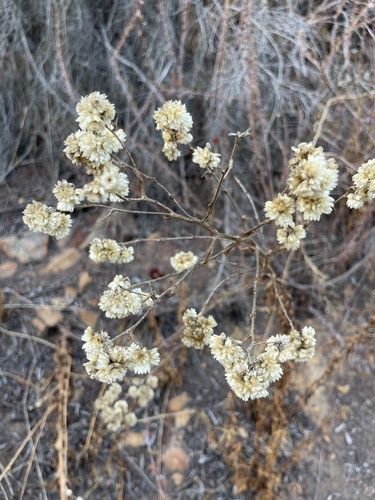
California pearly everlasting
Pseudognaphalium californicum
Care
full sun
very low
Fast, Medium, Slow; Very tolerant of various soils including clay, shale, sand, etc. Tolerates saline soil.,Tolerates serpentine soil.,Tolerates sodic soil..
0–2ft tall , 2–2ft wide
Jan-Dec
Deciduous
Resistant
Friendly
Coastal scrub and grasslands throughout coastal California from Mendocino County to San Diego County, below 3000 ft elevation.
Care Guide
Planting
Plant California pearly everlasting in full sun with fast to slow draining soil - it's remarkably tolerant of clay, sand, shale, and even saline or serpentine soils, so soil type is rarely a problem in the Bay Area. Plant in fall or winter to take advantage of the rainy season for establishment. Space plants 1–2 feet apart to give them room to branch out, and choose an informal garden area or wildscape where you won't mind volunteer seedlings popping up.
After Planting
Water regularly during your first summer to establish roots, then cut back to once a month or less once established - this is a drought-tolerant native that actually prefers dry conditions. Expect deciduous winter dormancy; the plant flowers winter through spring and produces copious seeds. Your biggest challenge won't be keeping it alive, but managing its prolific self-seeding: pull unwanted seedlings while small, or deadhead spent flowers if you want to prevent reseeding in specific areas.
Visit Calscape for more information about California pearly everlasting
Endangered & Threatened Species Supported
California Species of Special Concern
Wildlife Supported
Insects

larvae feed on foliage in spring; critical host plant for caterpillar development

larvae feed on host plant foliage during spring and early summer generations

caterpillars utilize foliage as food source during spring breeding period

nests and forages in proximity to plant; year-round presence

scavenges dried plant material year-round

native bee forages on flowers during warm season

adults feed on plant foliage during active season

collects pollen for provisioning nests during breeding season
+2 more species