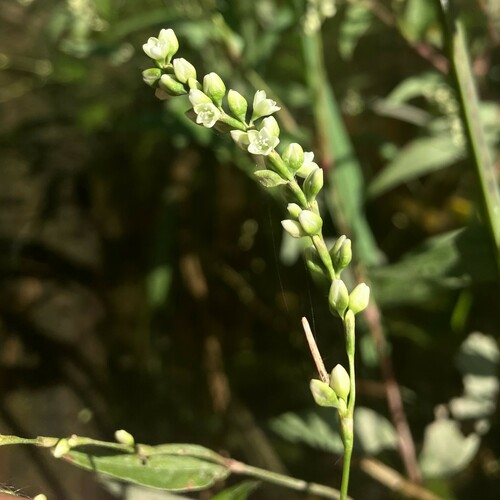
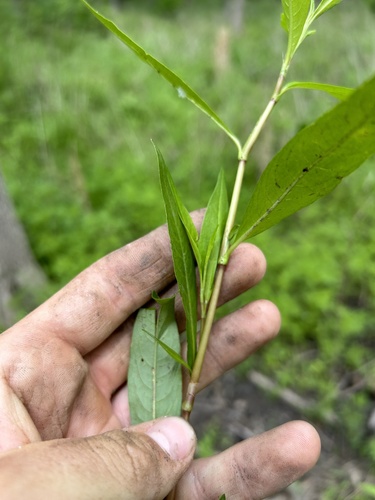
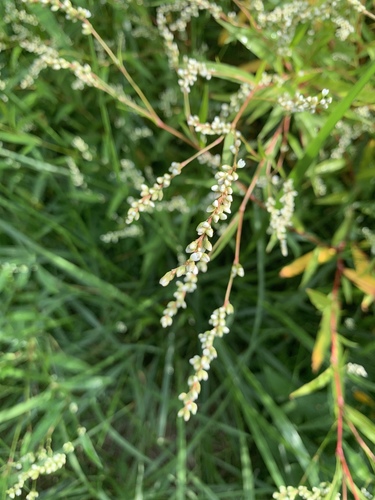
Dotted Smartweed
Persicaria punctata
Care
full sun
0–3ft tall
Deciduous
Friendly
Young leaves and shoots eaten raw or cooked as potherb
Wetlands and disturbed wet areas throughout California from the north coast to San Diego County, below 3000 ft elevation, along streams and marshes.
Care Guide
Planting
Plant Dotted Smartweed in full sun during spring or early summer when the soil can stay consistently moist. This native perennial thrives in wet habitats and shallow water areas, so choose a location near a pond edge, rain garden, or other area that stays boggy - it's not suitable for dry garden beds. Space plants about 2–3 feet apart since they grow moderately fast and reach up to 3 feet tall.
After Planting
Water consistently to keep soil wet or moist throughout the growing season; this plant actively grows during summer and requires reliable moisture. Expect it to die back in fall as a deciduous perennial, which is normal. Be aware that Dotted Smartweed is short-lived, so plan to replace it every few years or allow it to self-seed in your wet garden area.
Endangered & Threatened Species Supported
California Species of Special Concern
Wildlife Supported
Birds

Important seed source, particularly in fall and winter when other food scarce

Wetland specialist utilizing smartweed in marsh and pond margins

Critical fall migration staging food, particularly Aug-Oct during southbound passage

Winter waterfowl utilizing wetland smartweed stands

Fall migration and early winter food source in California range margins

Fall and winter waterfowl in California wetlands
Insects

Spring and summer larval host plant

Summer pollinator and pollen forager

Summer nectar source when available

Summer visitor for nectar while hunting herbivorous insects

Spring native bee pollinator

Larval foodplant for coastal and wetland populations

Host fungus, impacts plant health and productivity

Summer foliage feeding by nymphs and adults
+1 more species