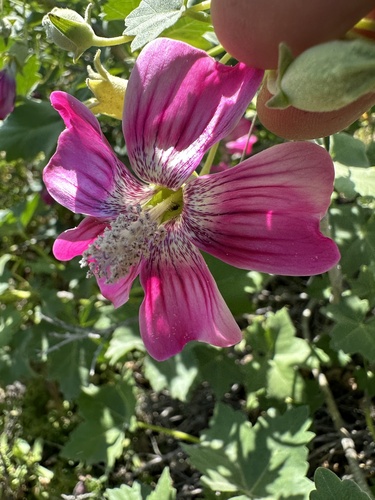
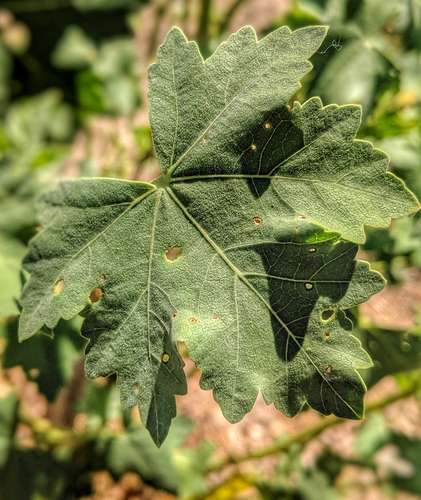
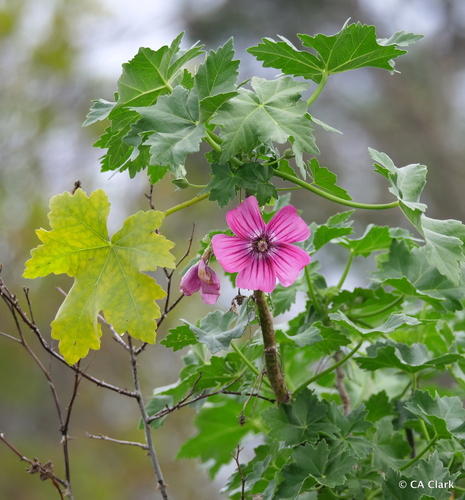
Island mallow
Malva assurgentiflora
Care
full sun
very low
Fast, Medium, Slow; Adaptable. Tolerates serpentine soil..
3–13ft tall , 5–10ft wide
Jan-Dec
Evergreen
Prized
Endemic to the Channel Islands (Santa Cruz, Santa Rosa, and Anacapa Islands) off the coast of Santa Barbara County, in coastal sage scrub.
Care Guide
Planting
Plant Island mallow in full sun with well-draining soil - it's adaptable enough to handle fast, medium, or even slow drainage, and tolerates serpentine soil if that's what you've got in your Bay Area garden. The best time to plant is in fall or early spring. Space plants 3–4 feet apart if you're using them as a hedge, since they'll grow 3–13 feet tall depending on variety and conditions.
After Planting
Water weekly during your first summer to establish the plant, then taper back to once every two weeks by mid-summer, then to just twice a month once established - the key is keeping soil well-drained so it won't rot. Prune branches back annually (late winter or early spring works well) to keep the plant compact and encourage bushy growth. The #1 mistake is overwatering: this is a low-water plant that only needs supplemental irrigation in summer; winter rains handle the rest.
Endangered & Threatened Species Supported
California Species of Special Concern; monarch populations declining
Wildlife Supported
Birds

Year-round resident utilizing mallow blooms, especially important in winter

Critical nectar source during spring breeding and fall southbound migration
Insects

Mallow is primary larval host plant for this species

Multiple generations utilize mallow as larval food plant throughout growing season

Multiple broods utilize mallow foliage for larval development

Nectar source during spring breeding and fall migration fuel-up

Nocturnal pollinator attracted to mallow blooms