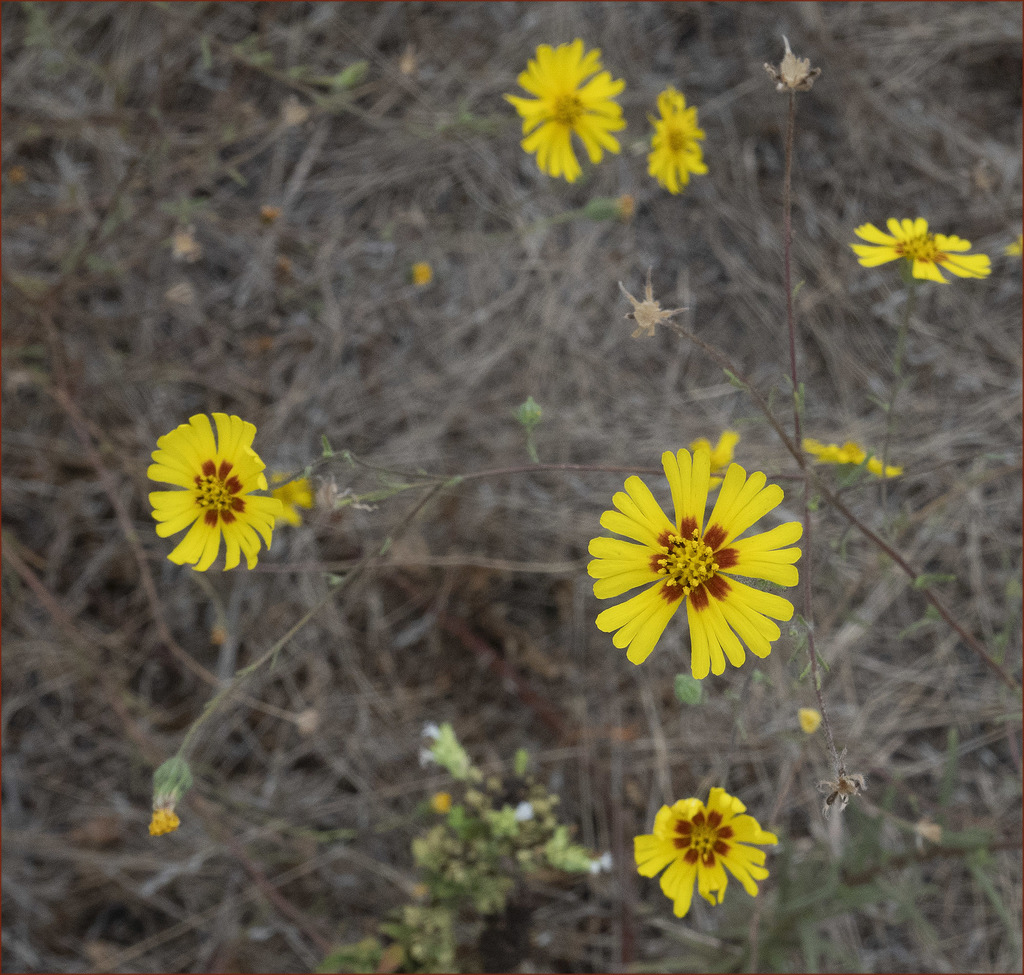
Tarweed
Madia elegans
Care
full sun, part shade
low
Fast, Medium, Slow; Adaptable.
4–6ft tall , 1–2ft wide
Jun-Nov
Resistant
Prized
Seeds eaten; traditionally harvested and eaten by Indigenous peoples
Interior valleys and foothills throughout California from the Oregon border to San Diego County, below 4000 ft elevation, in grasslands and disturbed areas.
Care Guide
Planting
Plant tarweed in full sun in a spot with fast to medium drainage - it adapts to most soil types, so don't overthink the dirt. Since it's an annual wildflower that blooms summer through fall, plant it in spring after the last frost. Space plants to give them room to grow to their full 4–6 feet, and pair them with other sun-loving, drought-tolerant natives for a low-maintenance garden.
After Planting
Water weekly for the first month after planting to establish roots, then back off dramatically - once established, this plant needs water just once a month or less during summer. After flowers fade in fall, you can deadhead for tidiness or leave the seed heads for birds to enjoy. Year one is straightforward: full sun, minimal water, and almost no fussing. The biggest mistake is overwatering; tarweed evolved for dry conditions, so treat it like the low-maintenance plant it is.
Endangered & Threatened Species Supported
California Species of Special Concern; monarch populations declining
California Species of Special Concern
California CESA Candidate species
Wildlife Supported
Insects
primary summer foraging resource when flowers available
summer generalist forager
late summer population buildup before fall migration
specialist pollen forager, late summer blooming
extended summer foraging season
mid to late summer foraging period
summer adult nectar source
generalist flower visitor, summer activity
+6 more species
Birds
seed availability in late season, fall dispersal period