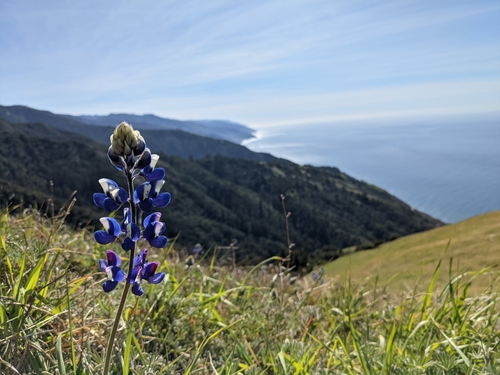
Sky Lupine
Lupinus nanus
Care
full sun
moderate
Fast, Medium, Slow; Tolerates sandy or clay soils.
0–2ft tall , 1–1ft wide
Jan-Dec
Deciduous
Resistant
Friendly
Prized
Supports up to 74 butterfly and moth species in Mediterranean California
Central Valley and Coast Ranges from Shasta County to Kern County, below 3000 ft elevation, in grasslands and oak woodland understory.
Care Guide
Planting
Plant Sky Lupine in full sun in fall or winter - it's an annual that flowers winter through spring, so timing your planting for the cooler season gives it the best shot. This plant is unfussy about soil and will tolerate sandy or clay soils with fast, medium, or slow drainage, so don't overthink your soil prep. Space them as you'd expect for a dwarf plant (0.3 to 2 feet tall depending on variety), and you can even tuck them into containers if you prefer.
After Planting
Water moderately through the growing season, but once established, you only need to water a maximum of twice a month during summer - this is a drought-tolerant native. The main mistake people make is overwatering; resist the urge to keep it constantly moist. Since it's an annual, plan for it to complete its lifecycle in one season, though it will self-sow if you let seed heads mature, giving you volunteers next year.
Endangered & Threatened Species Supported
Listed under ESA since 1976; found only in San Francisco Bay Area
California state threatened species
California Threatened; Species of Special Concern
California Species of Special Concern
Wildlife Supported
Insects

Caterpillar host plant; critical for population persistence in coastal areas

Secondary host plant for caterpillar development

Important larval host plant for caterpillar development

Adult nectar source during flight season

Adult nectar forager; prefers open grassland populations

Adult forager during peak bloom

Host plant for multiple generations in favorable years

Adult forager; early season nectar source