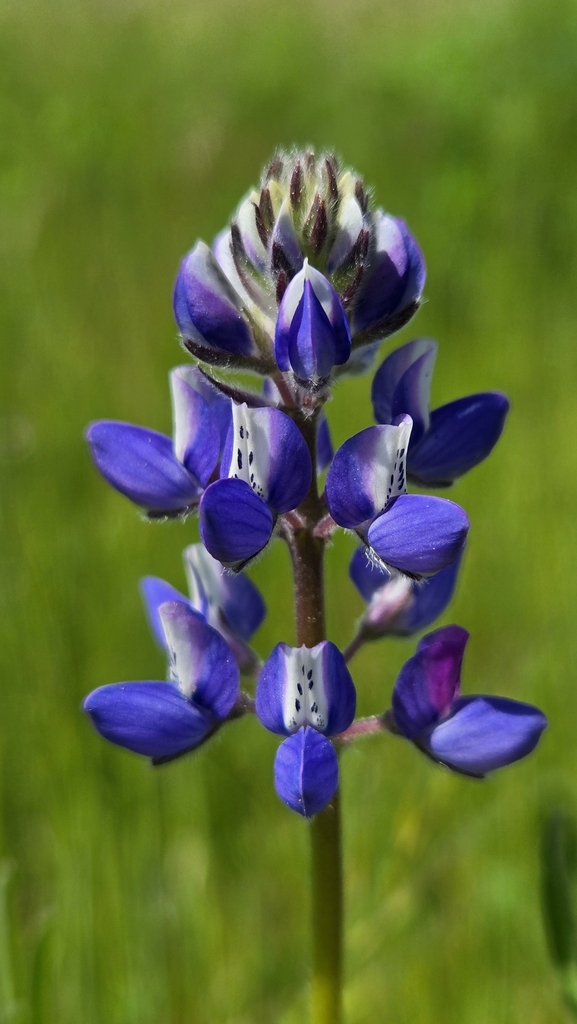
Bicolored lupine
Lupinus bicolor
Care
full sun
moderate
Medium; Tolerates a variety of soils including very poor soil.
0–1ft tall , 1–1ft wide
Mar-May
Friendly
Prized
Supports up to 74 butterfly and moth species in Mediterranean California
Interior valleys and foothills throughout California from the Coast Ranges to the Sierra Nevada foothills, below 4000 ft elevation, in grasslands and open woodlands.
Care Guide
Planting
Plant bicolored lupine from seed in the fall, pressing seeds just ¼ inch deep into the soil. Choose a spot with full sun if you're on the coast or part sun if you're inland, and make sure your soil drains well - though this plant tolerates poor soil and various soil types, so you have flexibility here. Space plants a few inches apart to accommodate their 3-inch mature height. They pair beautifully with California poppies for a classic spring wildflower look.
After Planting
Water moderately through the growing season, but once established, you'll only need to water about once a month during summer or less. Since this is an annual, expect it to bloom in spring (March through May) and complete its life cycle by early summer - this is normal and not a sign something went wrong. The biggest mistake people make is overwatering; this tough little wildflower actually prefers drier conditions once it's established, so resist the urge to coddle it.
Wildlife Supported
Birds
Primary seed consumption during fall and winter months when other food sources decline
Insects
Larvae feed on lupine foliage; multiple generations per year
Opportunistic breeder; larvae feed on lupine when populations bloom