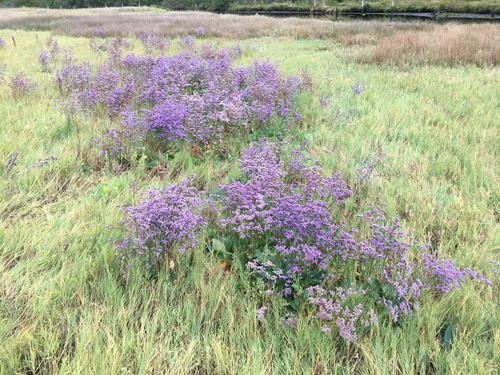
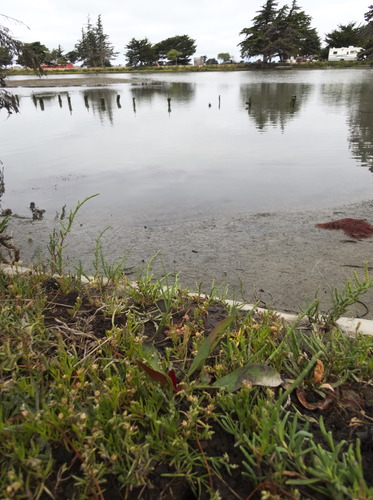
Western marsh rosemary
Limonium californicum
Care
full sun
low
Fast, Medium, Slow, Standing; Adaptable. Tolerates saline soil..
1–2ft tall , 1–2ft wide
Jun-Nov
Evergreen
Resistant
Friendly
Prized
Coastal salt marshes from Marin County to San Diego County, sea level to 500 ft elevation.
Care Guide
Planting
Plant western marsh rosemary in full sun in a location with fast to medium drainage - it's adaptable to various soil types and actually tolerates saline soil, making it a good choice if you have poor or salty conditions. This evergreen perennial can handle Bay Area winters (cold tolerance to 25-30°F), so fall through spring is ideal planting time. Space plants about 1.5–2 feet apart to accommodate their mature height of 1–2 feet.
After Planting
Water weekly during the first summer to establish the plant, then transition to a moist but not soggy schedule - it comes from wet coastal habitats and needs consistent moisture, not drought conditions. Once established, you can reduce frequency, but avoid letting it dry out completely. The biggest mistake is treating this like a typical California drought-tolerant native; it's a marsh plant that wants moisture, not a succulent. Expect blooms from June through November with minimal pruning needed.
Visit Calscape for more information about Western marsh rosemary
Endangered & Threatened Species Supported
California Clapper Rail; federally and state endangered
California endemic, breeding population decline
Wildlife Supported
Birds

Dense marsh vegetation provides essential nesting and escape cover in coastal salt marshes; critical habitat structure

Primary dietary component in coastal marsh habitats; grazes on vegetation in shallow water and mudflats

Breeding season foraging in salt marsh edges; indirect dependency through fish communities supported by marsh vegetation

Dabbling duck feeding on marsh vegetation; especially important during winter months when other food sources limited
Insects

Multiple generations spring through fall; larvae feed on salt marsh plant tissues

Adult feeding on inflorescence resources during breeding season