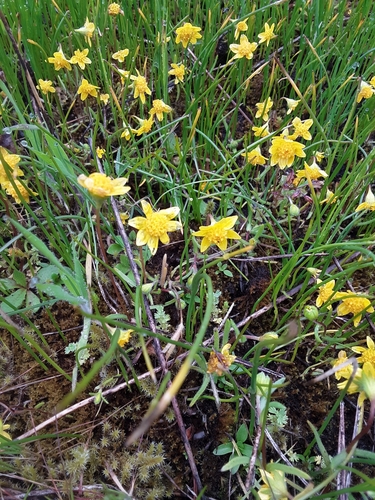
California goldfields
Lasthenia californica
Care
part shade, full sun
very low
Medium; Variable.
0–1ft tall , 0–0ft wide
Jan-Dec
Friendly
Prized
Central Valley and coastal foothills from Kern County to Mendocino County, below 2000 ft elevation in grasslands and coastal scrub.
Care Guide
Planting
Plant California goldfields from seed, which germinates readily - this is the most common way to grow it. Choose a spot with full sun or partial shade and medium-draining soil; this plant is flexible about soil type but needs decent drainage. Plant in fall or winter to take advantage of the natural rainy season and spring bloom period. Space plants about 6–12 inches apart to allow room for mature plants that reach up to 1.3 feet tall.
After Planting
Water young plants regularly until established, then cut back dramatically - once established, this annual needs only very low water and should require watering no more than twice a month during summer. Since this is an annual, expect it to bloom heavily in spring and then decline as temperatures warm; this is normal behavior, not a sign of poor care. The biggest mistake is overwatering: this California native thrives on neglect once it's past the seedling stage, so err on the side of dry rather than moist.
Visit Calscape for more information about California goldfields
Endangered & Threatened Species Supported
Federally endangered since 1967; restricted to serpentine grasslands in Bay Area
Endemic to Santa Catalina Island; listed under ESA
Some subspecies federally protected; species has state endangered designation
California state threatened species
California Species of Special Concern
Wildlife Supported
Insects

Primary larval host plant for this Bay Area endemic subspecies during early spring emergence
Critical larval food plant for caterpillars in early spring; host plant dependency varies by subspecies and population

Spring wildflower bloom provides essential nectar and pollen for reproductive females

Early spring pollen source for emerging females provisioning nest cells

Larval food plant supporting caterpillar development in spring

Early spring nectar source during flight season

Nectar source during spring flight season

Pollen and nectar foraging on wildflower blooms
+7 more species