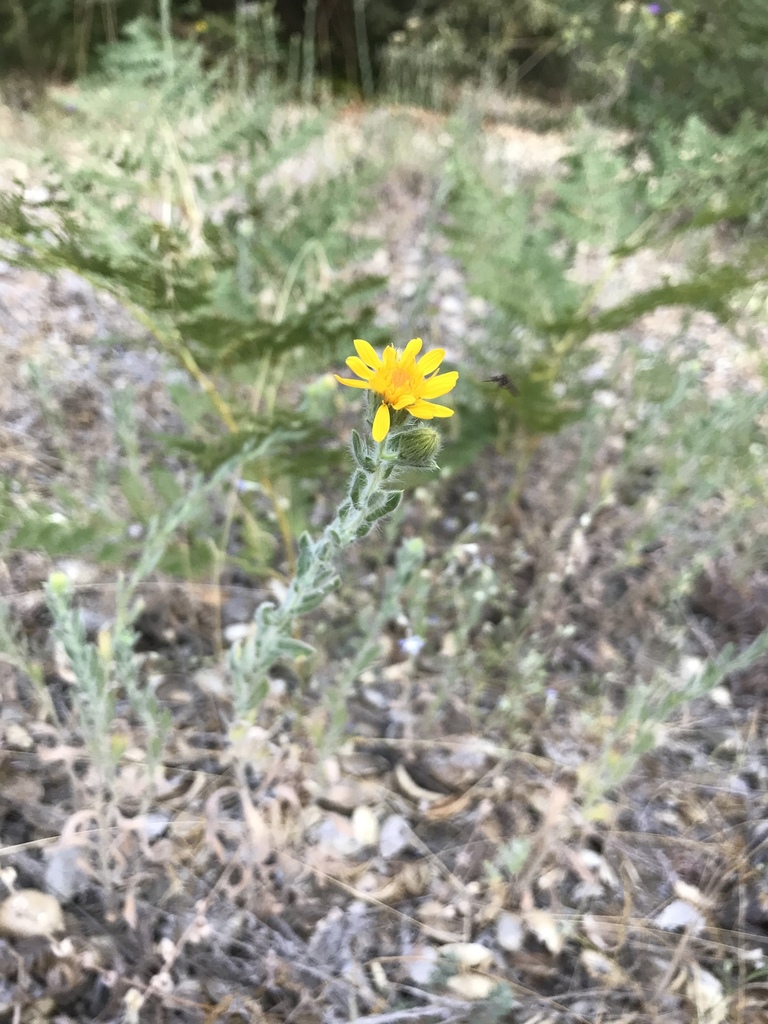
Golden aster
Heterotheca sessiliflora
Care
full sun, part shade
low
Fast, Medium; Usually found in sand but tolerates garden soil.
2–4ft tall
Jan-Dec
Resistant
Friendly
Prized
Coastal bluffs and scrub from Sonoma County to San Luis Obispo County, below 1000 ft elevation.
Care Guide
Planting
Plant your golden aster in full sun with fast-draining or medium soil - it naturally grows in sandy conditions but adapts well to garden soil, so don't overthink amendments. Space plants according to their mature size (2–4 feet tall depending on subspecies), and aim to plant in fall or early spring when Bay Area soil moisture is naturally higher. This California native tolerates both low and moderate water once established, so choose a spot where you won't be tempted to overwater it.
After Planting
Water weekly through your first summer to help roots establish, then taper off as the plant enters its second year - golden aster's low-water tolerance means overwatering is the #1 way to kill it. Expect year-round blooms (January through December), which is this plant's main selling point, and don't be alarmed if it looks scraggly or variable in appearance, as that's natural for the species. Pruning specifics aren't documented in available data, so observe your plant's growth habit and prune lightly if needed to maintain shape, but this tough native generally requires minimal fussing once established.
Endangered & Threatened Species Supported
Listed as Threatened under California Endangered Species Act
Wildlife Supported
Insects
host plant for larvae development Apr-Oct
larval food plant for multiple generations Mar-Sep
larval host plant Mar-Jul with multiple generations
larval food plant early season Mar-Jun
host plant for late season broods Jul-Oct
generalist host plant for multiple broods Apr-Oct