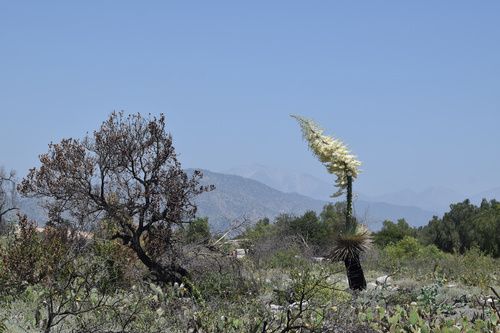
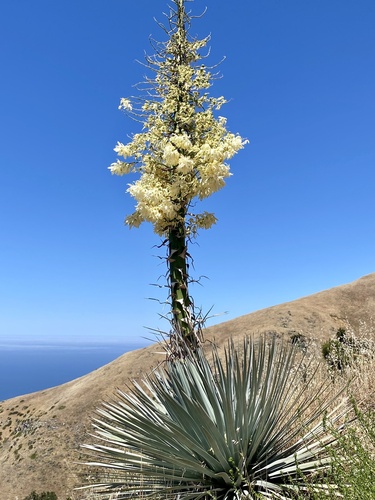
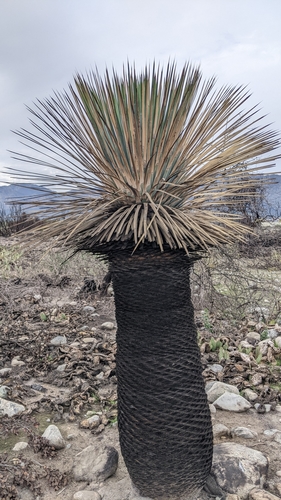
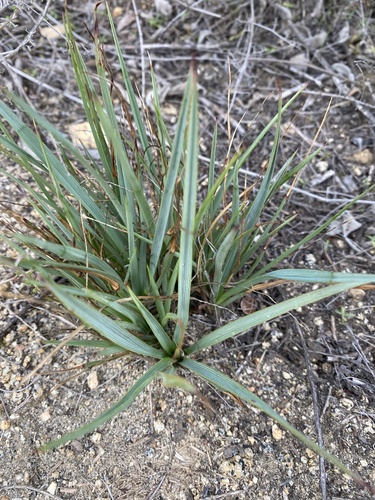
Chaparral Yucca
Hesperoyucca whipplei
Care
full sun
very low
Fast; Prefers rocky soils.
2–12ft tall , 2–3ft wide
Mar-May
Evergreen
Resistant
Friendly
Prized
Flower buds eaten cooked; fruits and seeds edible when processed
Transverse and Peninsular Ranges of southern California in Los Angeles, Ventura, and San Diego counties, 1500-5000 ft elevation in chaparral.
Care Guide
Planting
Plant your chaparral yucca in full sun with fast-draining, rocky soil - this is non-negotiable for success in the Bay Area. The best time to plant is in fall or early spring to give the plant time to establish before summer heat. Space it away from pathways and high-traffic areas, since the sharply pointed leaves can cause injury. This plant pairs beautifully with other drought-adapted plants and rocks in native gardens.
After Planting
Water weekly during your first summer, then taper to once a month or less as the plant establishes itself - mature plants need very little water after the first year. Year 1 is about getting roots established; expect the plant to focus on growth rather than flowering. The major thing to know: chaparral yucca is monocarpic, meaning it will die after flowering (typically 5–6 years in), but it will produce offsets at the base and seeds that grow into new plants. The #1 mistake Bay Area gardeners make is overwatering or planting in poorly draining soil - this plant wants it dry.
Wildlife Supported
Insects

Larvae develop within yucca flowers and fruit; pollination mutualism

Critical pollinator; larvae develop within yucca fruit; obligate mutualist with Hesperoyucca whipplei

Larvae feed on yucca tissues; specialized host relationship

Larvae develop within yucca inflorescence

Specialized on Hesperoyucca species; larval development in flowers

Larvae bore through yucca rosettes; significant herbivore on chaparral yucca
Native bee species collecting pollen from yucca flowers

Adults forage on yucca leaves and flowers in chaparral
+3 more species
Birds

Desert songbird; feeds on yucca fruits in winter chaparral; important dispersal agent