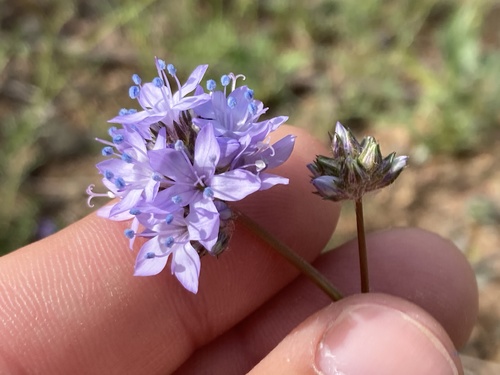
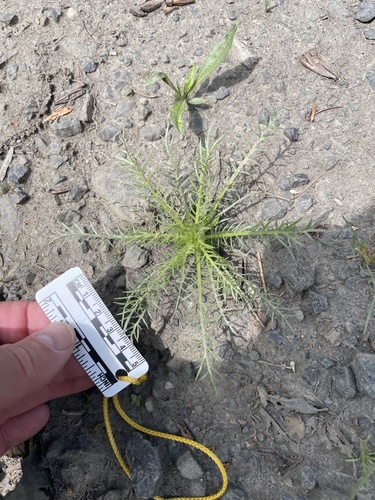
Blue Field Gilia
Gilia capitata
Care
full sun
very low
Fast, Medium; Tolerates clay but does best in well-drained soil.
0–3ft tall
Jan-Dec
Resistant
Friendly
Prized
Interior valleys and foothills from Kern County to Shasta County, 500-5000 ft elevation in grasslands and open woodlands.
Care Guide
Planting
Plant Blue Field Gilia in full sun with fast-draining or medium soil - it tolerates clay but prefers well-drained conditions. Space plants to accommodate their variable mature height of 1 to 3 feet, and consider planting in a meadow-like setting with other wildflowers and annuals for the best effect. Plant in fall or early winter to align with the plant's winter-to-spring blooming season. This California native is cold-hardy to -20°F, so timing isn't critical for frost protection in the Bay Area.
After Planting
Water regularly during establishment (roughly twice monthly once established during summer), then drastically reduce watering - this is a very low-water plant that needs little supplemental irrigation once it takes hold. The #1 mistake is overwatering: this wildflower evolved in sandy and rocky soils across western North America and will struggle in consistently moist conditions. Year one focuses on root development rather than dramatic growth, and the plant doesn't require pruning; simply enjoy the spherical clusters of blue, lavender, pink, or white flowers that appear winter through spring.
Endangered & Threatened Species Supported
California Species of Special Concern; monarch populations declining
California Species of Special Concern
Wildlife Supported
Insects

Critical spring migration fuel (northbound) and fall pre-migration energy source (southbound)

Adult nectar resource during flight season

Regional butterfly utilizing wildflower blooms during flight season

Multi-brooded skipper utilizing flowers throughout growing season

Migratory species utilizing flowers during northbound and southbound passages