← Back to results

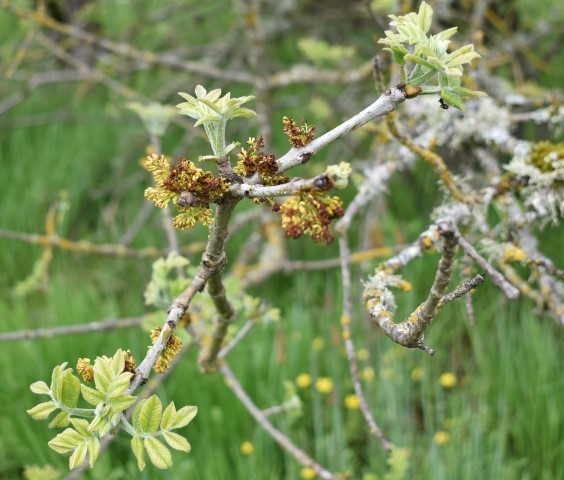
Oregon ash

Fraxinus latifolia

Care

Sun

full sun, part shade

Water

moderate

Soil

Slow; Typically found in poorly drained, moist bottom land with deep soil rich in humus.

Size

35–82ft tall , 30–30ft wide

Bloom

Mar-May

Foliage

Deciduous

Keystone Plant

Supports up to 57 butterfly and moth species in Mediterranean California

Native Range

Riparian areas in northern California from Humboldt County to Kern County, sea level to 3000 ft elevation along streams and rivers, extending to Oregon and Washington.

Care Guide

Planting

Plant Oregon ash in full sun to part shade in a location with moist, poorly drained soil rich in organic matter - it naturally thrives in riparian bottomlands, so it actually prefers wetter conditions than many Bay Area plants. Space it where it has room to grow 35-80 feet tall at maturity. Plant in fall or winter during the dormant season when the tree can establish roots before summer heat. If your soil drains too quickly, amend it with compost to retain moisture and mimic its native wet habitat.

After Planting

Water moderately and consistently during the first growing season to keep the soil moist, then taper off as the tree establishes - young Oregon ash are fast-growing and need regular moisture in their early years. Expect the tree to go fully dormant and drop its leaves in winter. Don't be alarmed if you see brown spots or signs of disease on the leaves even on healthy plants; this is normal for the species. The most common mistake is planting this tree in fast-draining soil or letting it dry out; it's a lowland species that needs moisture to thrive.

Visit Calscape for more information about Oregon ash

Wildlife Supported

Birds

Nesting · Year-Round

Uses cavities in dead ash snags for nest sites April-July; cavity-dependent breeder

Insects

Larval Host · Year-Round

Larvae develop in bark galleries; important natural population regulator

Larval Host · Year-Round

Native bark beetle; larvae tunnel in cambium and wood

mod Ash aphid
Foliage · Year-Round

Sap-feeding on foliage; populations peak early summer

Foliage · Year-Round

Phloem-feeding hemipteran; multiple generations on ash foliage

Larval Host · Year-Round

Nymphs and adults feed on ash foliage; acoustic signals peak August-September

Shelter · Year-Round

Dense canopy provides shelter; riparian ash galleries important for overwintering invertebrates

Larval Host · Year-Round

Buprestid beetle; larvae bore through wood tissues

Larval Host · Year-Round

Larval food plant for caterpillars; multiple generations May-September

Where to Buy

Oaktown Native Plant Nursery

702 Channing Way, Berkeley

Wed-Sun 10am-5pm

1.0 mi (510) 387-9744 Website
East Bay Wilds

2110 Eighth St, Suite 202, Berkeley

Fri 9:30am-4pm (occasional Sat, call ahead)

1.5 mi (510) 409-5858 Website
Native Here Nursery

101 Golf Course Dr, Tilden Regional Park, Berkeley

Sat 10am-2pm

3.0 mi (510) 549-0211 Website
Watershed Nursery

601A Canal Blvd, Richmond

Tue-Sun 10am-4pm

5.0 mi (510) 234-2222 Website