Wax Myrtle
Morella californica
Care
full sun, part shade
moderate
moist, tolerates clay and poor drainage
10–30ft tall , 8–20ft wide
Mar-Apr · greenish
Evergreen
Resistant
Berries (drupes) rendered for wax or eaten fresh; traditional Indigenous food
Pacific Coast from Washington to Southern California
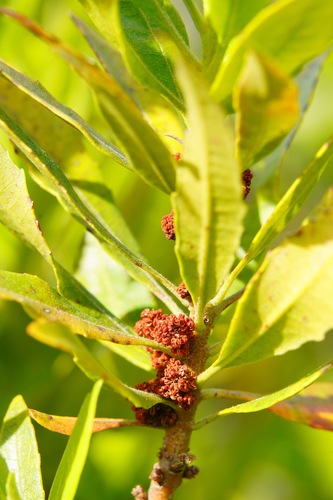
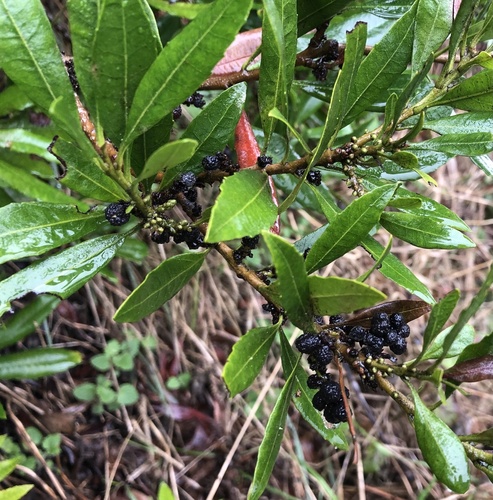
Inconspicuous flowers; waxy purple berries on female plants
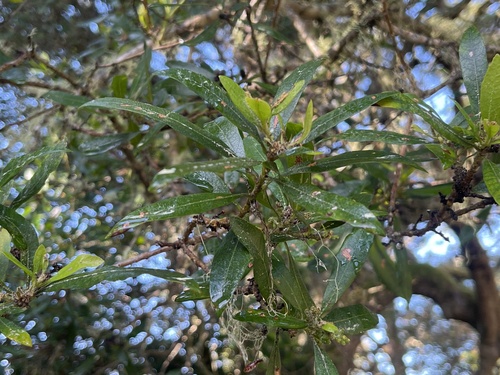
Excellent evergreen screen; nitrogen fixer; tolerates coastal wind
Care Guide
Planting
Plant your wax myrtle in full sun or partial shade - if you're inland in the Bay Area, afternoon shade with slightly more moisture will keep it happier than a full-sun spot. It tolerates a variety of soils including clay and poor drainage, so don't stress about amending heavily, but make sure water can drain reasonably well. Plant in spring or early fall to give it time to establish before summer heat.
After Planting
Water weekly for the first summer to help it establish, then taper back to once a week maximum during summer once established - after that, it's a low-water plant. In year one, you'll see active growth in spring and summer; let it settle in before pruning, but know you can shear it later to shape it as a hedge or formal specimen if you want. The #1 mistake is overwatering: this is a California native that prefers dry conditions once established, so err on the side of less water, especially in coastal gardens.
Wildlife Supported
Birds

Critical fall migration fuel and winter survival resource Sep-Mar in California

Year-round resident; berries supplement diet fall through spring
Insects

Larval host plant; overwinter as pupae in bag cases

Larval host plant; active feeding period May-Aug

Larval host; caterpillars feed on foliage Apr-Sep

Larval host plant; multiple generations Mar-Sep
Larval host; multiple generations throughout growing season